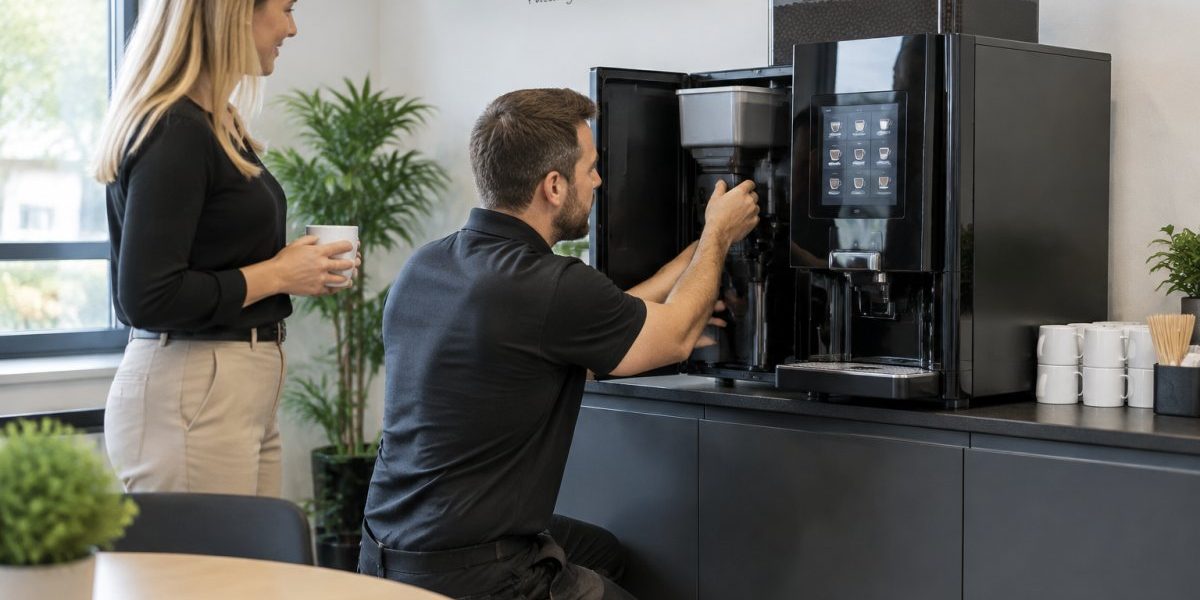
Last Updated: November 4, 2026
Quick Summary
Installing an office coffee vending machine means preparing the site, connecting power and water, commissioning the equipment and training staff so it pours consistent drinks from day one. A site survey comes first to confirm power, water and access, followed by installation and calibration on the day.
- Check the rating plate to confirm voltage and current draw match your building supply.
- Plumbed-in machines need a mains feed and drainage, while tank-fed units only need power.
- Flush at least two litres through the water line before the first brew.
- Adjust grind size and dose until shot time falls within the recommended range.
- Skipped cleaning is a common cause of faults, so agree a maintenance schedule.
Table of Contents
- What an Office Coffee Vending Machine Installation Involves
- Office Coffee Machine Requirements: Power, Water and Space
- The Bean to Cup Coffee Machine Water Connection Explained
- Why a Coffee Machine Site Survey Comes First
- Your Office Coffee Machine Installation Checklist
- Staff Training, Calibration and Preventative Maintenance
- Common Installation Mistakes to Avoid
- Book a Professional Installation and Get Your Instant Quote
- Frequently Asked Questions
What an Office Coffee Vending Machine Installation Involves
Installing an office coffee vending machine is the process of preparing a site, connecting power and water, commissioning the equipment and training staff so the machine pours consistent drinks from day one. At Admiral Vending, we have eight years of industry experience, and the offices that prepare properly tend to get a machine that runs reliably from day one.
Here is the part most guides skip. Installation is more than a single visit. It typically involves a site survey, preparation and commissioning, and getting each stage right helps the machine settle in smoothly.
Below, we break down each requirement, share the checklist we use on site, and flag the mistakes that cause the most callbacks. For a broader walkthrough of professional coffee machine installation in the workplace, read this related guide next.
Office Coffee Machine Requirements: Power, Water and Space
Three requirements decide whether a machine fits your room: a suitable power supply, a water source and enough clear space around the unit. Miss any one of them and the installation stalls on the day.
Electrical load and voltage requirements
Commercial machines draw more current than a kettle, and many need a dedicated circuit. Check the machine’s rating plate before you plan anything else.
A few practical points:
- Confirm the voltage and current draw match your building’s supply
- Ask whether the machine needs its own circuit breaker
- Check the socket position so the cable reaches without an extension lead
- Keep the plug accessible for isolation during cleaning
If you are unsure, ask your electrician to review the rating plate. A quick check now avoids a tripped circuit later.
Space planning and machine footprint
Measure the equipment footprint, then add clearance for the door swing, cup dispenser and ventilation. A machine squeezed into a corner overheats and blocks the queue.
Walk the route from the entrance to the final position. Doorways, lifts and stairs all need to accommodate the delivery.
If you are weighing machine types, you can browse the commercial bean to cup range that matches the power and water requirements discussed here.
The Bean to Cup Coffee Machine Water Connection Explained
A bean to cup coffee machine water connection is either plumbed directly into the mains supply or fed from an internal water tank that staff refill by hand. The choice affects where the machine can sit and how much daily upkeep it needs.

Plumbed-in machines need a water feed and drainage connection, while tank-fed machines need a nearby power socket and regular refilling by staff.
Plumbed-in versus tank-fed machines
Plumbed-in units suit busy sites where the machine runs all day. Tank-fed units suit smaller rooms where plumbing is impractical.
| Feature | Plumbed-in | Tank-fed |
|---|---|---|
| Water source | Mains feed pipe | Refillable tank |
| Daily upkeep | Minimal | Manual refills |
| Best for | High-volume offices | Small offices, meeting rooms |
| Plumbing needed | Yes | No |
| Placement | Near a water supply | Anywhere with power |
If you are still deciding between machine styles, this comparison of bean to cup and instant machines explains how the plumbing and tank options differ in practice.
Why a Coffee Machine Site Survey Comes First
A coffee machine site survey is a short inspection that confirms the location, power, water and access before anyone books a delivery date. It is the step that turns assumptions into facts.
During the survey, we check:
- The proposed position and clearance around the unit
- The power supply and whether a dedicated circuit is needed
- The water feed point and drainage requirements
- The delivery route and doorway widths
- Surface leveling so the machine sits flat
A site survey helps identify what needs doing before installation day, so the office manager can brief facilities and electricians with confidence.
Your Office Coffee Machine Installation Checklist
Use this office coffee machine installation checklist to keep the project on track. It splits the work into what happens before the day and what happens on it.
Before installation day
- Confirm the machine model and delivery date in writing, and check the rating plate against your building’s supply
- Book the electrician to fit any dedicated circuit, and ask them to confirm the breaker rating in writing
- Arrange the water feed pipe and tap if plumbed-in, and confirm the plumber will flush the line before connection
- Clear the delivery route and final position, measuring doorways, lifts and stairs against the machine’s crate dimensions
- Check the surface is level and strong enough, using a spirit level and confirming the floor can take the loaded weight
- Confirm who will be on site to sign off, and give them the engineer’s arrival window
- Tell staff when the machine goes live, and share the drink selection and any allergy information for milk-based options
On the day
- Meet the engineer and confirm the position, checking clearance for the door swing, cup dispenser and ventilation
- Isolate power during connection, and keep the plug accessible for isolation during cleaning
- Connect water, check for leaks and flush the line, running at least two litres through before the first brew
- Power up, run a test cycle and calibrate, adjusting grind size and dose until the shot time falls within the machine’s recommended range
- Taste-test the first drinks, checking espresso, milk-based and long drinks against the expected flavour profile
- Walk staff through operation and daily cleaning, covering the control panel, milk handling and the rinse cycle
- Sign the handover and file the paperwork, including the warranty terms and the maintenance schedule
A common mistake is leaving the water connection until the day, so it helps to arrange the plumber in advance. If you want a single document to share with your facilities team, copy this checklist into your project folder and assign each line an owner before the survey.
Staff Training, Calibration and Preventative Maintenance
Training and calibration on the day decide whether the machine performs to its potential. A well-trained team gets better drinks and fewer faults.
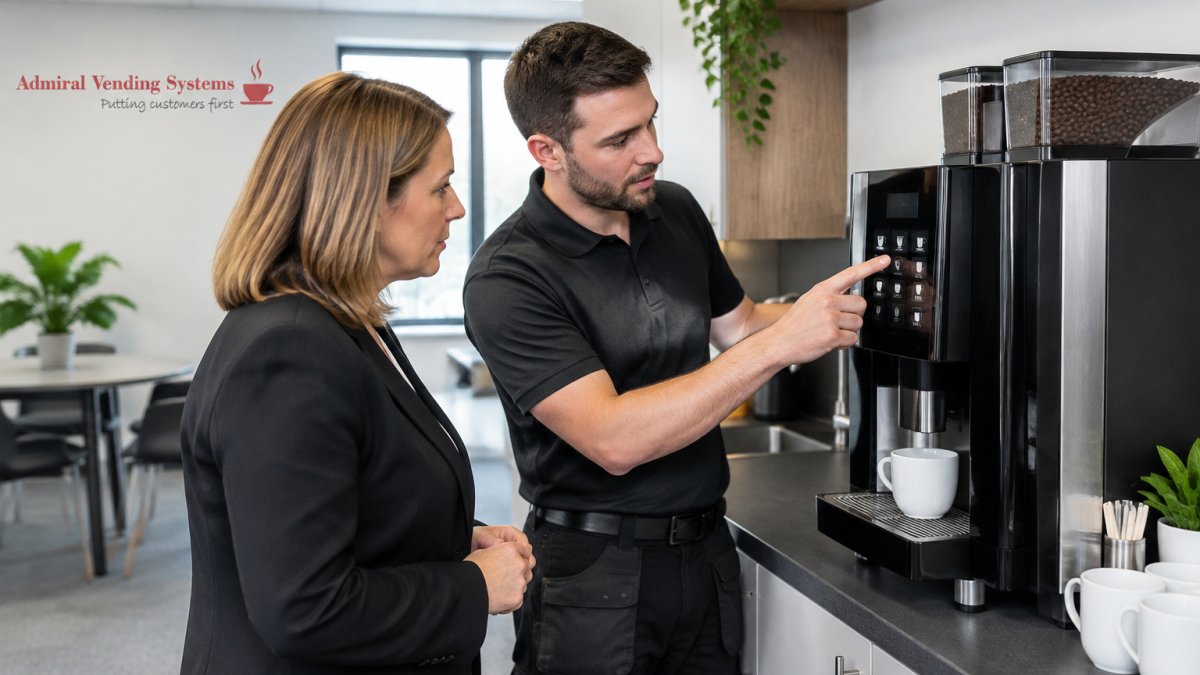
As staff learn to calibrate the machine and keep up with preventative maintenance, they can also automate coffee delivery so supplies stay aligned with the office’s changing needs.
Operators can be shown the control panel, drink selection and daily cleaning routine, and a preventative maintenance schedule can be agreed.
Regular cleaning is an important part of maintenance, as skipped cleaning is a common cause of faults. For a deeper walkthrough, read these 7 steps to clean office coffee machines properly.
Common Installation Mistakes to Avoid
The same handful of errors cause most post-install problems. Watch for these before they cost you a service call, and weigh them against the decision to self-install or book a professional.
- Ignoring the rating plate. Check the voltage and current draw against your supply before you plan anything else.
- Skipping the site survey. Surprises on the day delay everything, from a missing water tap to a doorway too narrow for the crate. A short survey turns assumptions into facts.
- No water filtration. Scale builds up and shortens boiler life, and in hard water areas the effect is visible within months.
- Blocking ventilation. Machines overheat when boxed into cupboards, and the fault often appears as inconsistent drink temperature rather than a clear error code. Leave the clearance the manual specifies.
- No staff training. Untrained users press wrong buttons and report faults, and the callout often ends with a demonstration rather than a repair. A ten-minute walkthrough on the day prevents most of these.
- No maintenance plan. Small issues become expensive repairs, and the pattern is consistent: most faults trace back to skipped cleaning, not worn parts.
Self-install versus professional install: the trade-off
A common pattern is for office managers to consider self-install to avoid the setup fee. The trade-off is rarely about the connection itself, which is straightforward on a tank-fed machine, and more about what happens when something goes wrong. On a plumbed-in unit, a poorly seated water feed can leak behind the unit, and the damage may not appear until the floor or cabinetry is affected.
If you are weighing the two, ask the supplier three questions: whether the warranty requires professional installation, who is liable for water damage after connection, and what the callout response time is if the machine faults in the first month. The answers usually make the decision for you.
Watch out: placing the machine where the queue blocks a walkway is a genuine health and safety concern. Plan the office coffee station so people can wait clear of fire exits and doorways, and check that the queue does not block access to a fire extinguisher or first-aid point.
Book a Professional Installation and Get Your Instant Quote
Professional setup removes the guesswork from every step above. It covers the survey, the connections, the calibration and the training, so your team walks in to a working machine.
At Admiral Vending, we provide delivery, professional installation, operator training and nationwide support, and our Google rating is 5.0/5.0. Our AI powered instant quote system can help you request a quote for the right machine.
You can view the office coffee machine range and request an installation quote when you are ready to move.
Frequently Asked Questions
What do you need to install an office coffee vending machine?
You need a level surface, a nearby power supply and, for plumbed-in models, a mains water feed and drainage. A site survey confirms the electrical load, water pressure and machine footprint are suitable. Before the technician arrives, clear the area and confirm access for delivery.
Does a bean to cup coffee machine need a water connection?
Not always. Plumbed-in bean to cup machines connect directly to the mains water supply and need a water feed pipe and drainage, so they suit high-volume offices where refilling a tank would interrupt service. Tank-fed models need no plumbing and are easier to place, but someone must refill them daily. Your site survey will confirm which option your workplace can support.
How long does it take to install a commercial coffee machine?
Installation time depends on the machine and site, and the site survey identifies any extra work needed before installation day. The site survey identifies any extra work, such as surface leveling or a new power supply, before installation day. Allow time afterwards for machine calibration and a short user training session for staff.
Can an office coffee machine be installed without plumbing?
Yes. Tank-fed and some automatic coffee machines run without a water connection, which suits meeting rooms, smaller offices or listed buildings where plumbing work is impractical. The trade-off is daily refilling and a smaller capacity.
Installing a machine well takes planning, but the payoff is a workplace that runs on good coffee with almost no fuss. Ready to get started? Get your instant quote from Admiral Vending and have a professionally installed machine pouring fresh drinks for your team.