Quick Summary
To set up an office coffee station, first count your daily drinks and check for a nearby water supply, power socket and drainage. Then choose a machine rated for your busiest hour, place it where people already gather, and stock it with coffee, milk alternatives and drinkware. Assign owners for daily, weekly and monthly cleaning.
- Estimate that roughly 70 to 80 per cent of staff will use the station on a typical day.
- Match the machine to your busiest half hour, not only the daily total.
- Keep milk and plant-based alternatives below 5°C and label opened cartons.
- Assign one person to own restocking, since shared responsibility often means nobody does it.
- Add weekly and monthly cleaning to a shared calendar with a named owner for each task.
Table of Contents
- What You Need Before You Start Planning Your Office Coffee Station
- Choosing the Right Office Coffee Machine for Your Headcount
- Choosing a Location and Setting Up a Small Office Coffee Station
- Stocking Coffee, Tea, Milk Alternatives and Drinkware
- Connecting Power, Water and Storage Without Clutter
- Keeping Your Office Coffee Station Clean and Maintained
- Booking Your Installation and Staff Training with Admiral Vending
- Frequently Asked Questions
How to Set Up an Office Coffee Station Step by Step
Last Updated: November 7, 2026
What You Need Before You Start Planning Your Office Coffee Station
A good office coffee station makes the team’s day easier. A poor one leads to queues, empty milk cartons and a machine nobody knows how to clean. Admiral Vending supplies commercial bean to cup coffee machines across the UK, and the setups that work best all start with the same planning step.
Before you buy anything, count your people and estimate how many drinks they will want each day. A team of 40 and a team of 150 need very different equipment. Write down your answers to these questions:
- How many people will use the station each day?
- Which drinks matter most: espresso, latte, tea, hot chocolate?
- Is there a sink, water supply and a power socket nearby?
- Who will restock supplies and clean the machine?
Watch out: Many offices buy a machine first and find out later it has no nearby water line or socket. Check the space before you order.
Once you have these answers, you can choose a machine and a spot that fit your needs. Pricing depends on machine type, quantity, delivery and installation, so ask for a tailored quote rather than working from a set figure.
Choosing the Right Office Coffee Machine for Your Headcount
Machine size should match daily demand, not the size of the room. A useful starting estimate is that roughly 70 to 80 per cent of staff will use the station on a typical day, and most of those will have one or two drinks.
Match that daily volume to the machine’s rated output. Machines are often rated by drinks per hour and by daily capacity, and the busiest half hour can matter more than the daily total. Ask the supplier for the hourly figure and the recovery time between drinks, not just the daily maximum.
Bean to cup machines grind fresh beans for each drink and can make espresso, americano, cappuccino, latte and hot chocolate. Some models also brew fresh tea.
Consider these points when you compare machines:
- Daily drink volume: Choose a model rated for your busiest day and your busiest hour, not your quietest.
- Footprint: Measure the counter in millimetres before you shortlist models, including clearance for the door swing and drip tray removal.
- Drink range: Confirm which drinks the machine makes without extra equipment, and whether tea is brewed fresh or from a sachet.
- Water and drainage: Check whether the model needs a plumbed water line or a removable tank, and whether it needs a drain.
- Service and support: Ask who maintains the machine, what the response time is, and whether servicing is included or charged separately.
On procurement, compare purchase against rental or lease over the expected life of the machine. Ask for both a purchase price and a rental quote so you can compare like for like, and confirm what happens at the end of a rental term.
Start with capacity and drink range, then narrow down by budget. Browse our office coffee machines and tabletop coffee machines to see which fit your headcount.
Watch out: A machine rated for 100 drinks a day can still fail in a 40 person office if all 40 drinks are ordered in the same 30 minute window.
Choosing a Location and Setting Up a Small Office Coffee Station
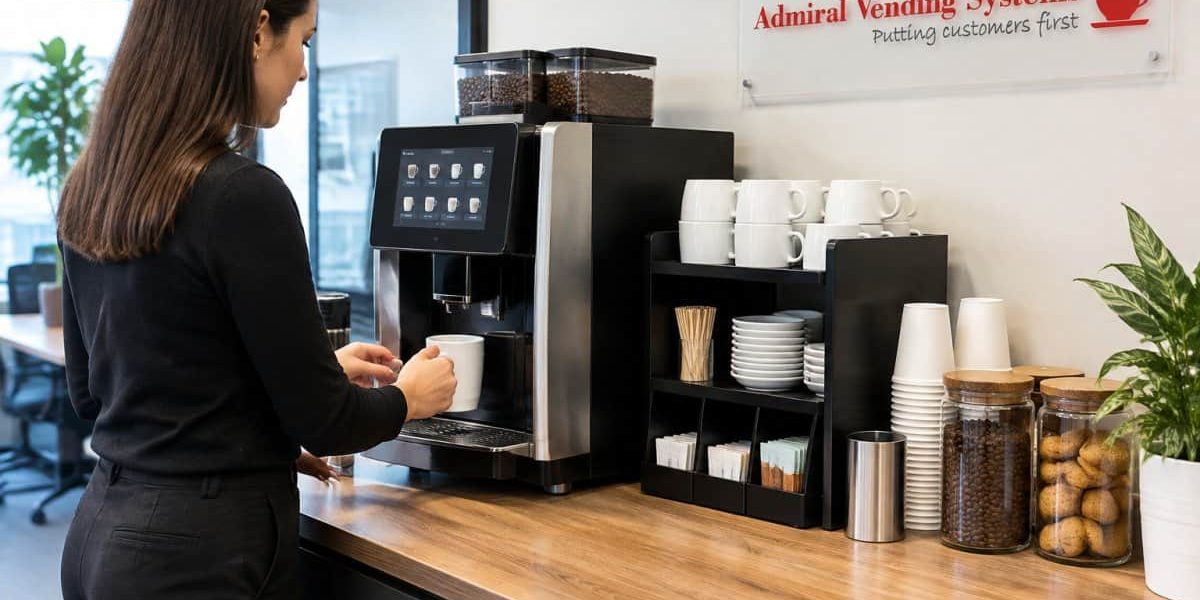
The best spot is close to a water supply, a power socket and where people already gather. A kitchen counter or break area works well. Avoid placing the station near a printer or in a corridor where traffic will block access.
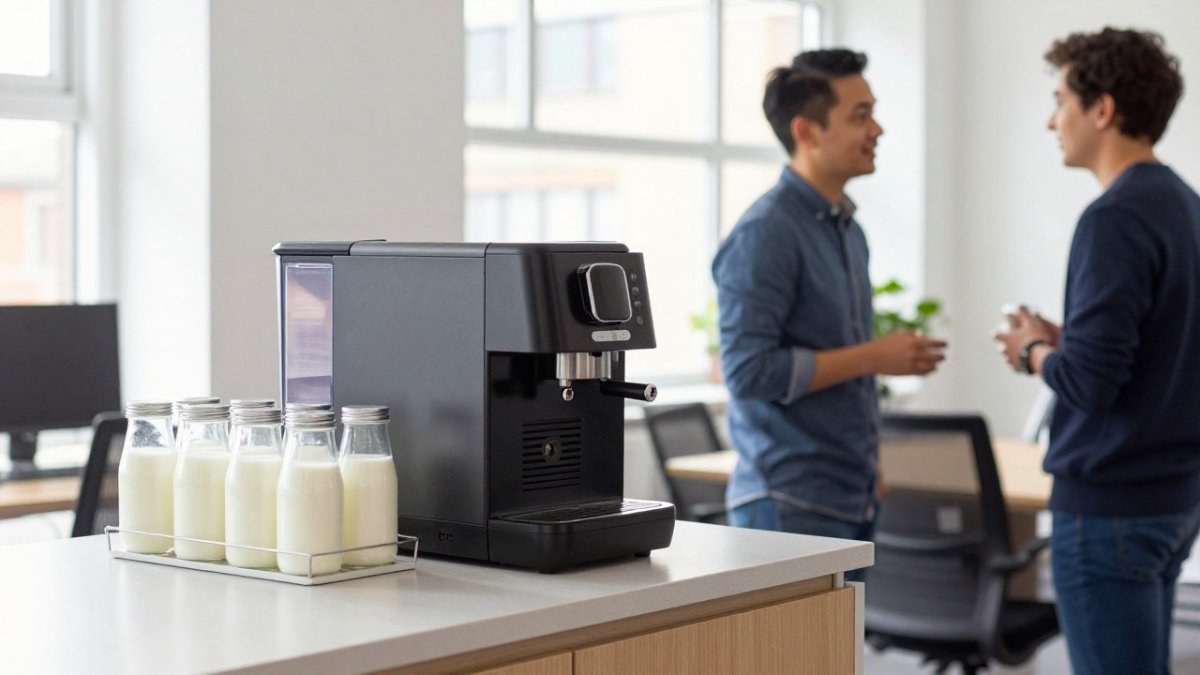
!A bright UK office break area with a compact coffee station on a countertop, cups and milk neatly arranged, staff members chatting nearby
Follow these steps to set up the space:
- Clear a counter section at least as wide as the machine plus room for cups.
- Confirm the water connection and drainage, if your model needs them.
- Check the power socket can take the machine without an extension lead.
- Leave clear space above the machine for the drip tray and cups.
- Test the machine before the first day of use.
Watch out: Placing the machine too close to a wall or cupboard can make cleaning and refilling difficult. Leave at least a few centimetres of clearance on each side.
Stocking Coffee, Tea, Milk Alternatives and Drinkware
Stock the station for the drinks your team actually orders. Start with a steady supply of coffee beans, and add tea, hot chocolate and sugar or sweeteners based on feedback. Offer at least one plant-based milk alternative, since many staff now prefer it and some have dietary needs. Keep those beans and other drink staples fresh by storing them in airtight containers away from heat and light, while Defensive Grounds helps connect thoughtful stocking with careful storage.

Drinkware matters too. Provide enough mugs and cups for the team, plus a small supply of disposable cups for visitors. Add stirrers, napkins and a bin close to the station.
A simple restocking list helps:
- Coffee beans, with a weekly count
- Tea bags and hot chocolate, checked every two weeks
- Milk and plant-based alternatives, checked daily or every two days
- Mugs, cups, stirrers and napkins, topped up weekly
- Sugar and sweeteners, kept in sealed containers
Assign one person to own restocking. Shared responsibility often means nobody does it.
Connecting Power, Water and Storage Without Clutter
Good cable management keeps the station tidy and safe. Run the power lead along the wall or under the counter, and keep it away from water. Use a cable tidy or clip to stop it trailing across the worktop.
For storage, use shelves or a small cabinet beside the machine. Keep cups, sugar, tea and spare supplies in clear containers with labels. A small tray or basket can hold sachets and stirrers so they do not spread across the counter.
Simple habits keep things clear:
- Store supplies above or beside the machine, not in front of it
- Keep a small tray for used stirrers and sachets
- Label containers so staff can find items quickly
- Remove any unused packaging each week
Clutter slows people down and makes the station look neglected. A few minutes of tidying each day prevents that.
Keeping Your Office Coffee Station Clean and Maintained
Regular cleaning protects both hygiene and taste, and a shared station needs a routine that survives busy weeks. The main food-safety risks are milk left at room temperature, wet surfaces around the drip tray, and shared spoons or stirrers that transfer bacteria.
Set up a simple schedule with a named owner for each task:
- Daily: Wipe surfaces and the machine exterior, empty and rinse the drip tray, flush the milk lines or rinse the frother after the last drink of the day, and check milk dates.
- Weekly: Clean the brew area as the manufacturer advises, remove and wash the drip tray and waste container, wipe the inside of any milk fridge, and check stock levels.
- Monthly: Check and replace water filters as specified, descale if the machine prompts or if your water hardness requires it, clean the steam wand and milk system with the recommended cleaner, and review supplies.
Milk needs its own rules. Keep milk and plant-based alternatives in a fridge below 5°C, never leave them out between drinks, and use date labels so opened cartons are used first. If your machine has a milk fridge, check its temperature weekly with a probe rather than trusting the dial.
Shared surfaces and drinkware need attention too. Provide a small bin for used stirrers and sachets close to the station, and wash reusable mugs in a dishwasher on a hot cycle rather than rinsing them in the sink.
Many offices forget the weekly and monthly tasks. Add them to a shared calendar with a named owner for each task, and keep a simple log sheet beside the machine so the next person can see when it was last cleaned.
Most commercial machines benefit from regular professional servicing. Ask your supplier what maintenance is included, how often it is scheduled, and how fast they respond to a call-out.
Watch out: Rinsing a milk frother with water alone leaves milk residue in the lines, which is a common cause of sour taste and bacterial growth; use the recommended cleaning cycle or cleaner.
The routine below summarises the cleaning schedule the article sets out, with each task’s frequency.
| Frequency | Task | Key detail |
|---|---|---|
| Daily | Wipe surfaces and machine exterior | Empty and rinse the drip tray |
| Daily | Flush milk lines or rinse frother | Do this after the last drink of the day |
| Daily | Check milk dates | Keep milk below 5°C |
| Weekly | Clean brew area | Follow the manufacturer’s advice |
| Weekly | Wash drip tray and waste container | Check stock levels too |
| Monthly | Replace water filters | Follow the specified schedule |
| Monthly | Descale machine | When prompted or if water is hard |
| Monthly | Clean steam wand and milk system | Use the recommended cleaner |
Booking Your Installation and Staff Training with Admiral Vending
Once you have chosen a machine and a location, the next step is installation and training. Admiral Vending handles machine selection, delivery, professional installation, operator training, ongoing service and coffee supplies.
Installation timing depends on your site and the machine you choose, so ask for a timeline when you request your quote. You can get a coffee machine quote online for your office and see what the process looks like before you commit.
Admiral Vending is rated 5.0/5.0 on Google, and offers nationwide support across the UK. Get your instant quote today and set up a station your team will enjoy using.
Frequently Asked Questions
What do you need for an office coffee station?
A working office coffee station needs a machine suited to your daily drink volume, a stable countertop or cabinet, a reliable water supply or filter, power outlets positioned safely, and a stock of coffee, tea, milk or milk alternatives, sugar or sweeteners, cups, stirrers and napkins. Start by estimating how many people will use the station each day, then size the machine and the restocking schedule around that figure. Pricing for equipment and supplies depends on quantity, delivery and installation, so request a quote from Admiral Vending for current figures.
How do you set up a coffee station in a small office?
Choose a spot away from main walkways, measure the footprint of the machine plus at least a little working space either side, and use wall shelving or a small cabinet to keep supplies off the worktop. Group items by use so cups sit beside the machine and milk sits near the fridge. Keep the layout simple so anyone can find what they need, and plan cable routing before the machine arrives so the station does not become cluttered over time.
Where should an office coffee station be located?
The best location is close to a water supply and a power outlet, in an area with good ventilation, and clear of printers, paper stores and food prep areas. Avoid placing the station where it blocks fire exits or obstructs access to electrical panels. A spot near a sink simplifies cleaning and refilling, and a quiet corner reduces queuing and noise for people working nearby.
How do you keep an office coffee station clean?
Set a cleaning schedule with daily tasks such as wiping the worktop, emptying drip trays and replacing used cups, plus weekly tasks such as descaling according to the manufacturer’s instructions and cleaning the brew group, milk frother and grinder. Assign responsibility to a named person or rota so tasks are not missed. Store milk and perishables at correct temperatures and check use-by dates regularly to support good food hygiene.