Last Updated: October 29, 2026
Quick Summary
To install a professional coffee machine in the workplace, start with a site survey covering power, water, drainage, access and space, then work through a checklist from ordering to handover. Book qualified contractors for plumbing and electrical work, position and level the machine, connect and flush it, run test drinks and train staff.
- A site survey should check power, water, drainage, access, space and drinks volume before equipment is ordered.
- Confirm the electrical supply and whether a dedicated circuit is needed before you order the machine.
- Book water connection and plumbing with a qualified contractor before delivery day.
- New circuits and distribution board changes are electrical work for a qualified electrician.
- On installation day, position and level the machine, connect water and power, then fill and flush.
Table of Contents
- Why a Professional Coffee Machine Installation Needs Planning
- Start With a Commercial Coffee Machine Site Survey
- Your Commercial Coffee Machine Installation Checklist
- Choosing the Installation Location and Machine Placement
- The Commercial Coffee Machine Water Connection
- Commercial Coffee Machine Electrical Requirements
- Transporting, Positioning and Commissioning the Machine
- Book a Professional Installation and Handover
- Frequently Asked Questions
Why a Professional Coffee Machine Installation Needs Planning
A professional coffee machine installation involves planning plumbing, power and placement. At Admiral Vending, we have eight years of industry experience supplying commercial bean to cup machines.
This guide walks you through considerations for installing a professional coffee machine in the workplace.
Start With a Commercial Coffee Machine Site Survey
A commercial coffee machine site survey can involve a walk-through of the intended location to consider power, water, drainage, access and space before equipment is ordered.
What the Survey Should Cover
Walk the site with a clipboard and check each of these:
- Power: where the nearest sockets are, and whether the circuit can take the machine’s load
- Water: the nearest mains supply and its pressure
- Drainage: whether a drain line can reach the machine position
- Access: door widths, lifts and stairs on the delivery route
- Space: counter strength and clearance around the unit
- Volume: how many staff will use it, and at what times
Your Commercial Coffee Machine Installation Checklist
A commercial coffee machine installation checklist can help organise the project from order to handover.

Office Coffee Machines for UK Businesses | Barista Quality Coffee at Work | UK
Admiral Vending Systems
Before You Order
- Complete the site survey and record the findings in writing
- Confirm drinks volume, peak times and machine size
- Agree the final position and check clearances against the manufacturer’s dimensions
- Confirm the electrical supply and whether a dedicated circuit is needed
- Confirm the water supply, pressure and whether filtration is required
- Check delivery access: door widths, lift capacity, stairs and turning space
- Obtain building management or landlord permission for any plumbing or electrical work
- Agree who is responsible for each utility connection and who pays for it
Before Delivery Day
- Book the water connection and any plumbing work with a qualified contractor
- Book the electrical work with a qualified electrician
- Clear the delivery route and protect floors
- Confirm the counter or floor can take the machine’s loaded weight
- Arrange a named person to receive the machine and sign for it
- Confirm the installer’s arrival time and site access arrangements
On Installation Day
- Position the machine and level it
- Connect water and power, then fill and flush
- Run a test drink of each type, including a milky drink
- Check for leaks at every joint
- Set grind, strength and temperature
- Train staff and hand over the manuals and service details
Sizing the Machine to Your Drinks Volume
If you are unsure how to work out the numbers, our guide on how to calculate daily coffee output for businesses sets out the method. You can also check bean to cup machine capacity requirements to see what each machine class handles.
Here is the checklist broken down by stage, from ordering to handover.
| Stage | What to do |
|---|---|
| Before you order | Complete the site survey and record findings in writing |
| Before you order | Confirm drinks volume, peak times and machine size |
| Before you order | Confirm electrical supply and whether a dedicated circuit is needed |
| Before you order | Confirm water supply, pressure and whether filtration is required |
| Before delivery day | Book water connection and plumbing with a qualified contractor |
| Before delivery day | Book electrical work with a qualified electrician |
| On installation day | Position and level the machine, then connect water and power |
| On installation day | Run a test drink of each type, including a milky drink |
Choosing the Installation Location and Machine Placement
Machine placement decides how the whole coffee station works in practice. The best position is close to water and power, on a sturdy surface, with clear space in front and above.
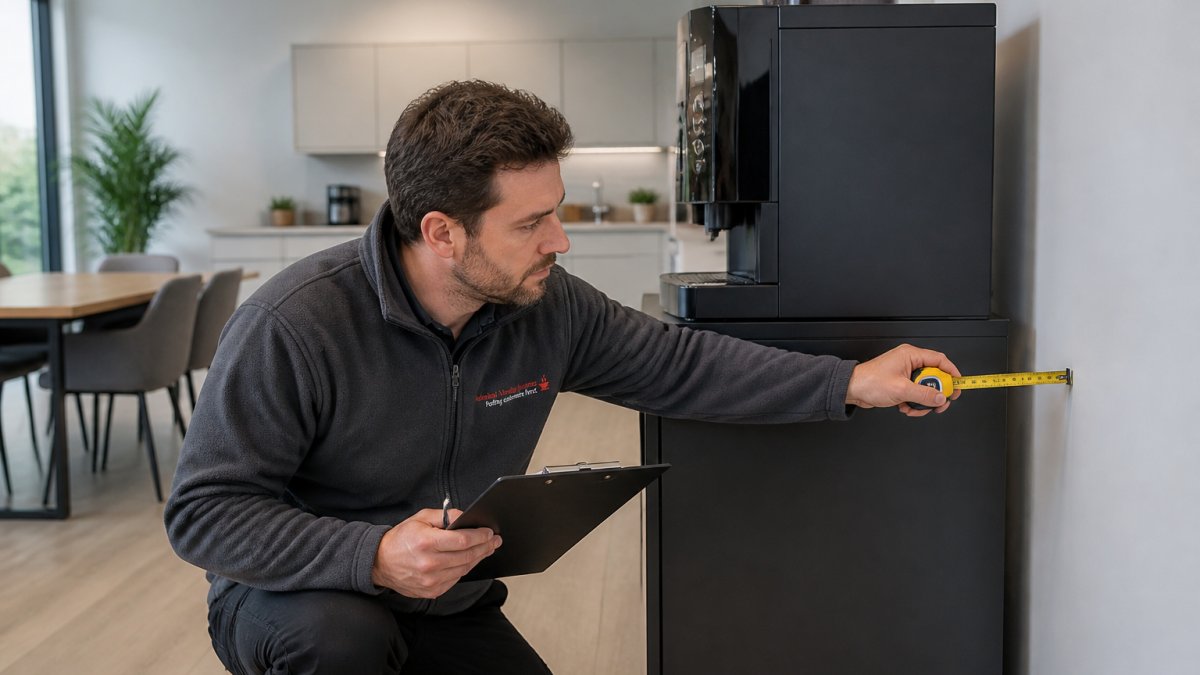
Proper ventilation and proximity to water lines remain critical for larger units, though smaller spaces may benefit from the streamlined footprint of coffee pods for offices.
- Leave clearance at the top for bean filling and at the front for cup placement
- Check the door opening angle on any cupboard above the machine
- Keep the unit out of walkways and away from fire exits
- Put it where staff naturally pass, not in a distant room
- Allow room beside it for cups, sugar and stirrers
If you are planning a full refreshment area, our guide on how to design an office coffee station covers layout, storage and waste. For larger sites, floor standing coffee machines for commercial use shows the options that suit high-footfall positions.
The Commercial Coffee Machine Water Connection
Connection requirements vary by model, so always follow the manufacturer’s installation instructions for pipe size and pressure. A professional installer will fit a pressure regulator where the mains runs high and check for leaks before commissioning.
Filtration, Hardness and Scale Prevention
A practical routine:
- Test the water hardness at the survey stage
- Choose a filter rated for that hardness level
- Log the filter change date on the machine
- Descale on the manufacturer’s interval, not when it breaks
Commercial Coffee Machine Electrical Requirements
Commercial coffee machine electrical requirements depend on the model. Check the manufacturer’s information and consult a qualified electrician about the supply.
Workplace Safety and Building Coordination
Electrical work in a workplace is not just a machine question. It touches building safety, access and permissions.
- Isolation: the electrician must be able to isolate the circuit safely and prove it dead before work starts
- Cable routes: cables must not cross walkways or create trip hazards, and must not run where they can be damaged
- Fire routes: the machine and its cabling must not narrow or block escape routes
- Ventilation: the machine needs space to dissipate heat, and enclosed cupboards are unsuitable
- Building management: many leases require landlord consent for new circuits or plumbing, and the building manager may need to isolate power for the work
- Accessibility: the socket and isolation point should be reachable without moving the machine
Who Does the Work
The machine supplier may connect the machine to an existing, suitable supply, but new circuits and distribution board changes are electrical work for a qualified electrician. Agree the boundary before the day: who isolates, who makes good, who tests and who signs off. A short written scope prevents the machine arriving with nowhere safe to plug in.
Transporting, Positioning and Commissioning the Machine
Commissioning can involve moving a machine into place, connecting it, filling it, testing it and configuring it.
Book a Professional Installation and Handover
Professional installation can include operator training.
At Admiral Vending, we provide delivery, professional installation, operator training, ongoing service support and coffee supplies. You can also find a supplier who can install, service and hand over the machine properly. Whether you are weighing up office coffee machines for a single kitchen or commercial bean to cup coffee machines for a busier site, the same planning steps apply.
Frequently Asked Questions
What do you need to install a commercial coffee machine?
Admiral Vending provides professional installation. The installation requirements depend on the machine and workplace.
Does a commercial coffee machine need a water connection?
Check the machine’s specifications for its water connection requirements.
Does a workplace coffee machine need a dedicated electrical supply?
Electrical requirements depend on the machine. Consult its specifications and a qualified electrician about the supply.
Who should install a professional coffee machine?
Admiral Vending provides professional installation and operator training. Ask about the installation arrangements and ongoing service support.
Getting a workplace coffee setup right means matching the machine to your volume, checking the utilities before you buy, and letting a qualified engineer handle the connections. Admiral Vending supplies commercial bean to cup machines with expert selection, professional installation, operator training and nationwide support. Get started with Admiral Vending and serve fresh, barista-style drinks your team will actually look forward to.