Table of Contents
- Bean to Cup vs Instant Coffee Machines: Quick Comparison
- How Bean to Cup and Instant Coffee Machines Work
- Coffee Quality and Flavour Profiles
- Commercial Coffee Machine Maintenance Requirements
- Best Coffee Brewer for Office Environments
- Total Cost of Ownership: Upfront and Ongoing Expenses
- Speed, Convenience and Employee Experience
- Environmental Impact and Coffee Waste
- Frequently Asked Questions
Last Updated: September 25, 2026
Bean to Cup vs Instant Coffee Machines: Quick Comparison
When 150 people arrive at the office expecting their morning coffee, the difference between bean to cup and instant coffee machines becomes immediately clear. One delivers café quality drinks on demand. The other offers speed and simplicity. The choice between bean to cup vs instant coffee machines shapes workplace morale, operational costs, and how your business is perceived by clients and staff.
At Admiral Vending, we’ve spent eight years helping businesses across the UK make this exact decision. The reality is neither option is universally “better.” What matters is matching the right machine to your workplace volume, budget, and quality expectations. This guide breaks down the genuine trade offs so you can decide what actually works for your operation.
Bean to cup machines deliver fresh, high quality drinks but require regular maintenance and higher upfront investment. Instant coffee offers zero maintenance and lower costs per cup but lacks the depth and aroma that fresh grinding provides.
How Bean to Cup and Instant Coffee Machines Work
Bean to Cup Extraction Process
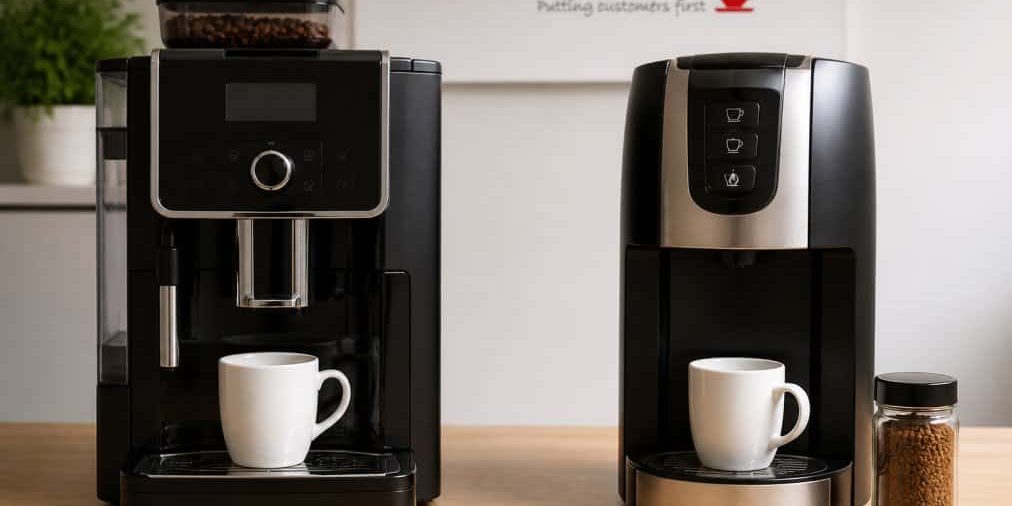
A bean to cup machine automates the entire journey from whole bean to finished drink. The process starts when you select your drink on the machine’s user interface. The grinder springs to life, crushing fresh beans to a precise particle size. This consistency matters enormously for extraction quality.
The freshly ground coffee then moves into the brewing chamber, where hot water is forced through the grounds under pressure. This pressure pump system is what separates bean to cup machines from basic drip brewers. The extraction process typically takes 25 to 30 seconds, pulling out the soluble compounds that create flavour, aroma, and body.
For milk based drinks, an automated milk frothing system heats and froths cold milk simultaneously. The machine combines the espresso and frothed milk in the correct proportions, delivering a cappuccino or latte that matches what you’d expect from a professional barista. When the drink finishes, the spent grounds are automatically ejected into a waste container.
Instant Coffee Preparation
Instant coffee takes a fundamentally different approach. The coffee beans are brewed, then the liquid is freeze dried into granules or powder. When you add hot water, these granules dissolve instantly into your cup.
The convenience is genuine. There’s no grinding, no pressure extraction, no brewing time. Boil water, add granules, stir. Done in under 60 seconds. The user interface is irrelevant because there’s no machine interface at all. You’re simply mixing soluble coffee with hot water.
The trade off is chemical. Freeze drying preserves some flavour notes, but the extraction process used during initial brewing differs from fresh bean extraction. The aroma compounds that make fresh coffee distinctive are largely lost during the freeze drying process. What remains is a consistent, predictable cup that tastes the same every time, but lacks the depth and complexity of freshly ground beans.
Coffee Quality and Flavour Profiles
The sensory difference between bean to cup and instant coffee is substantial. Fresh bean extraction produces a cup with layered flavour notes, crema on espresso shots, and an aroma that fills the room. The volatile compounds released during grinding and extraction create complexity that instant coffee simply cannot match.

Instant coffee delivers reliability over complexity. Every cup tastes identical because the product is standardised. For some workplaces, this consistency is valuable. For others, the flatness becomes noticeable after the first week.
The caffeine content is comparable between the two, typically 95 to 200mg per cup depending on brewing strength. The real difference lies in mouthfeel and flavour complexity. A fresh espresso has body and texture from the suspended solids in the liquid. Instant coffee, being fully dissolved, feels thinner on the palate.
For office environments where clients visit or where employee satisfaction matters, bean to cup machines typically win on quality perception. The visible grinding, the aroma, the professional presentation all signal that your business invests in quality. Instant coffee signals budget and convenience.
Commercial Coffee Machine Maintenance Requirements
This is where bean to cup and instant coffee machines diverge most sharply in operational reality.
Bean to Cup Cleaning and Descaling
Bean to cup machines require regular maintenance to function reliably. The brewing unit must be cleaned daily. Most modern machines have a removable brewing unit that you rinse under running water. Skip this step and coffee oils accumulate, creating bitter tasting drinks and eventually blocking the system.
Weekly descaling is necessary. Hard water deposits build up inside the heating elements and pipes. Descaling solution runs through the system to dissolve mineral buildup. Skip this and the machine’s performance degrades noticeably within weeks.
Monthly deep cleaning of the milk frothing system is essential if you serve cappuccinos or lattes. Milk residue hardens inside the steam wand and milk lines. Neglect this and the system clogs, forcing expensive repairs.
The drip tray fills with water and grounds.
A bean to cup machine left unmaintained for two weeks will likely need professional servicing. Dried coffee oils inside the brewing unit can cause permanent damage. The cost of repairs often exceeds the cost of preventive maintenance.
Instant Coffee System Upkeep
Instant coffee requires virtually no maintenance. You stock the granules in a container. Someone adds hot water. That’s the operational cycle.
Best Coffee Brewer for Office Environments
Small Office Settings
For offices with 30 to 50 people, instant coffee often makes operational sense. The maintenance burden of a bean to cup machine becomes disproportionate relative to the number of users. One person designated to clean the machine daily is realistic. The cost per cup remains reasonable because usage volume justifies the instant coffee inventory.
High Volume Workplaces
In offices with 100+ people or high footfall commercial environments like car dealerships and showrooms, only bean to cup machines make sense. The volume justifies both the upfront investment and the maintenance commitment. A high capacity commercial bean to cup coffee machine handles 200 to 400 drinks per day reliably.
Offices with 100+ employees, car dealerships, showrooms, hotels, and restaurants needing 200+ drinks daily.
Total Cost of Ownership: Upfront and Ongoing Expenses
The purchase price tells only part of the cost story. A true comparison requires examining total cost of ownership over three to five years.
| Factor | Bean to Cup | Instant Coffee |
|---|---|---|
| Upfront cost | Higher | Lower |
| Daily maintenance | 10 to 15 minutes | 2 to 3 minutes |
| Monthly servicing | Required | None |
| Cost per cup (high volume) | Lower | Higher |
| Cost per cup (low volume) | Higher | Lower |
| Quality perception | Professional | Budget conscious |
| Downtime risk | Moderate | Minimal |
| Staff satisfaction | Higher | Lower |
Speed, Convenience and Employee Experience
Bean to cup machines are slower than instant coffee. A single drink takes 45 to 90 seconds from button press to finished cup. During peak morning hours, queues form. Impatient staff sometimes skip the queue and go out for coffee instead.
Environmental Impact and Coffee Waste
Bean to cup machines produce coffee grounds waste. A machine serving 200 drinks daily generates roughly 1kg of spent grounds. Over a year, that’s 365kg of organic waste.
Frequently Asked Questions
Is a bean to cup machine worth the investment for a small office?
For small offices with 40 or fewer staff, the answer depends on daily throughput and budget priorities. Bean to cup machines deliver superior flavour and aroma profile compared to instant options, which boosts employee morale. However, instant coffee requires minimal maintenance and lower upfront investment. If your team values quality and you can accommodate professional installation and descaling cycles, bean to cup delivers measurable returns through reduced external coffee spending and improved workplace satisfaction. Admiral Vending offers tabletop solutions scaled specifically for smaller operations.
What are the main differences in coffee quality between bean to cup and instant machines?
Bean to cup machines grind freshly roasted beans immediately before brewing, preserving volatile aromatics and delivering full-bodied espresso extraction with rich crema. Instant coffee uses soluble granules created through freeze-drying or spray-drying, which cannot replicate the sensory complexity of fresh extraction. The aroma profile and caffeine content remain relatively stable in both, but the flavour consistency and barista-quality finish of bean to cup are substantially superior. For offices where employee experience and brand perception matter, this difference is significant.
How does the maintenance of bean to cup machines compare to instant coffee dispensers?
Bean to cup machines require regular descaling, cleaning of the brewing unit, and milk system maintenance to prevent blockages and bacterial growth. Maintenance cycles typically occur weekly or fortnightly depending on water hardness and usage volume. Instant coffee systems need only basic hygiene upkeep such as wiping dispensers and replacing supplies. For commercial environments, professional maintenance support is essential for bean to cup machines. Admiral Vending provides nationwide descaling and technical support to manage these requirements, ensuring operational efficiency and long-term reliability.
Which coffee machine option is more cost effective for high-volume workplaces?
Bean to cup machines deliver lower cost per cup in high-volume settings because freshly ground beans are significantly cheaper than instant granules when purchased in bulk. A 150-person office can save thousands annually by eliminating external coffee spending. Instant coffee offers the lowest entry cost and zero maintenance expense, but per-cup costs climb steeply at scale. For workplaces requiring hundreds of drinks daily, bean to cup’s operational efficiency and bulk bean pricing create measurable financial advantage. Contact Admiral Vending for a total cost of ownership analysis tailored to your daily throughput.
Do bean to cup machines provide a better employee experience than instant options?
Yes. Bean to cup machines deliver customisable drinks including espresso, cappuccino, and latte with barista-quality milk frothing, whereas instant coffee offers limited variety and flavour depth. Employees perceive fresh-ground bean coffee as a premium workplace benefit, which correlates with improved morale and reduced external coffee spending. The user interface on modern machines is intuitive, and customisable settings allow staff to personalise their drinks. For businesses competing for talent or enhancing client experience in showrooms and hospitality settings, bean to cup machines create measurable perception uplift.