Table of Contents
- Why Healthy Office Snack Programs Matter
- How Healthy Snacks for Work Improve Focus and Energy
- Office Snack Ideas That Support Employee Wellness
- Healthy Eating at Work and Its Impact on Productivity
- Designing and Implementing an Office Snack Program
- Measuring Program Impact and Return on Investment
- Budgeting and Managing Program Costs
- Frequently Asked Questions
Last Updated: October 6, 2026
Why Healthy Office Snack Programs Matter
A healthy office snack program transforms how your team works. It removes friction from the workday, boosts morale, and signals that you value employee wellbeing. The right setup changes office culture.
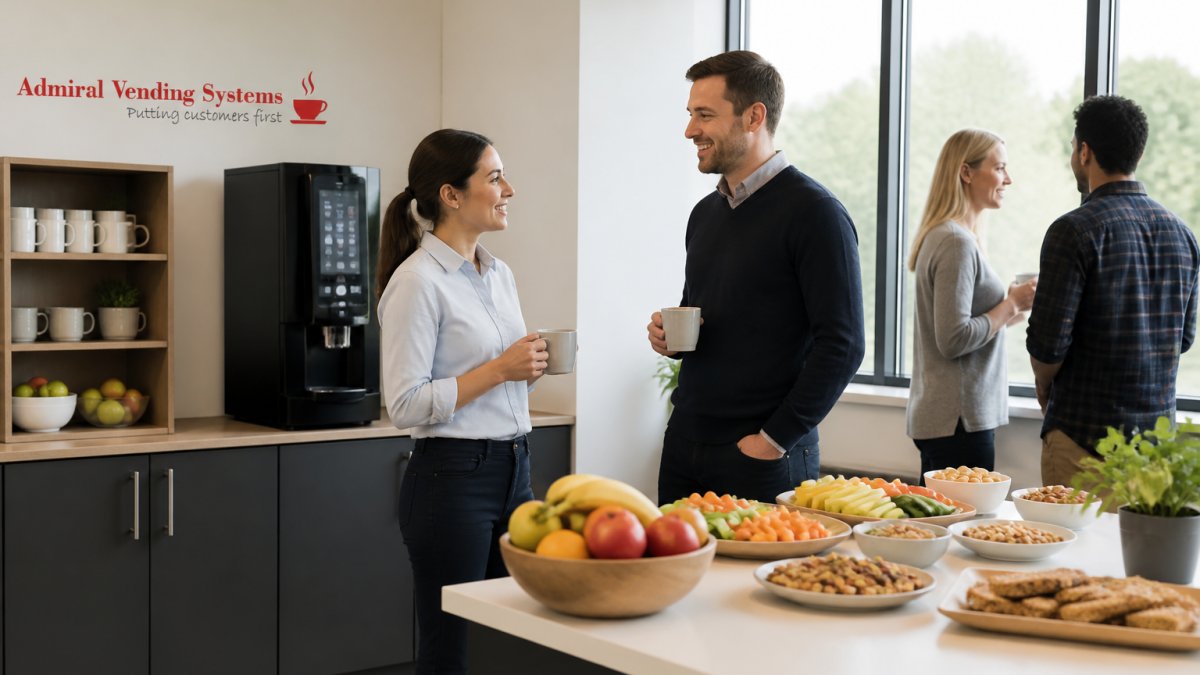
When employees have access to nutritious snacks and fresh beverages, they stay focused longer, take fewer breaks hunting for food, and feel cared for. These small gestures compound into measurable improvements in engagement and retention.
A healthy office snack program isn’t luxury. It’s a practical investment that pays off across productivity, morale, and reputation.
Healthy office snack programs reduce distractions, improve focus, and demonstrate genuine investment in employee wellbeing.
How Healthy Snacks for Work Improve Focus and Energy
Sustained energy depends on what employees eat between meals. A strategically chosen snack stabilises blood sugar and prevents the afternoon crash that kills productivity.
Nuts, seeds, and fruit provide slow-release energy through fibre and healthy fats that keep hunger at bay for hours. Unlike sugary snacks that spike and crash, nutrient-dense foods maintain steady concentration.
Fresh fruit offers vitamins and antioxidants that support cognitive function. Berries, apples, and oranges are portable, need no preparation, and suit most diets.
The science is straightforward: your brain uses glucose, and stable glucose means stable focus.
Stocking your breakroom with healthy choices directly supports the mental performance your business depends on.
Office Snack Ideas That Support Employee Wellness
The best office snacks are ones people actually eat. Convenience, appeal, and dietary fit matter more than nutritional perfection.

Start with fresh fruit. Bananas, apples, grapes, and berries suit almost every preference and dietary requirement, are affordable, keep for several days, and need no preparation.
Add nuts and seeds. Almonds, cashews, sunflower seeds, and pumpkin seeds deliver protein and healthy fats.
Include whole grain options. Oat cakes, wholemeal crackers, and granola bars provide sustained energy, but check labels for added sugar.
Dairy works for most. Greek yogurt, cheese, and milk are protein rich and support satiety.
Vegetables and hummus appeal to health conscious employees. Carrots, celery, and peppers are crunchy, satisfying, and low in calories, while hummus adds protein and flavour.
Offer herbal tea, water, and coffee. Fresh beverages matter as much as food. A bean to cup coffee machine delivers cafe quality drinks on demand, improving the breakroom experience and keeping employees on site during breaks.
A Practical Selection Framework
Rather than guessing, use four criteria to evaluate every snack before you stock it:
Nutrition density. Does it deliver fibre, protein, or healthy fats rather than empty calories? A snack that is mostly refined carbohydrate will spike and crash energy.
Shelf life and storage. Will it survive a week in a breakroom without refrigeration? Items that spoil quickly create waste and restocking pressure.
Dietary coverage. Does it serve at least two dietary groups? A snack that only suits one narrow preference will sit untouched.
Cost per serving. Is the cost per portion reasonable relative to satiety and nutrition delivered? Nuts cost more per gram but satisfy hunger with smaller portions.
Snacks to Avoid or Limit
Not every snack belongs in a healthy programme. Limit or exclude:
- Crisps and salty snacks, which are high in sodium and low in satiety
- Sugary cereal bars and biscuits, which cause energy spikes and crashes
- Energy drinks, which mask fatigue rather than resolve it
- Confectionery, which offers no nutritional value and undermines the programme’s credibility
This does not mean banning treats entirely. Many successful programmes offer a small treat alongside healthy choices, improving satisfaction and reducing any sense of restriction.
Rotate snack selections monthly to prevent monotony and accommodate seasonal availability. Survey your team to identify preferences and dietary restrictions before finalising your menu. Track which items disappear fastest and which sit untouched, then adjust your order accordingly.
Healthy Eating at Work and Its Impact on Productivity
How employees eat shapes how they work. When your team has access to healthy snacks, performance improves across multiple dimensions.
Sustained energy means fewer mid-afternoon energy slumps. Employees stay alert through to end of day. Mistakes decrease. Work quality rises.
Better nutrition supports mental clarity. The brain needs consistent fuel.
Hunger is a distraction. Hungry employees think about food, lose focus, and become irritable.
Healthy eating also reduces sick days. Proper nutrition strengthens immune function (pubmed.ncbi.nlm.nih.gov). Employees with access to nutritious snacks report fewer minor illnesses. Absenteeism drops.
Finally, healthy snack access improves morale and retention. Employees notice when their employer invests in their wellbeing, feel valued, and stay longer.
Designing and Implementing an Office Snack Program
A successful healthy office snack program follows a structured approach. These steps ensure it meets real needs, stays within budget, and delivers measurable results.
Step 1: Assess Your Workforce Needs
Start by understanding your team. How many employees work on-site? What are their dietary preferences and restrictions? Do you have vegetarians, vegans, or employees with allergies?
Survey your staff anonymously. Ask what snacks they buy, what they’d prefer in the office, and whether they have dietary restrictions. This prevents waste and ensures uptake.
Consider your office layout. Do employees work from multiple floors? Will one central breakroom serve everyone, or do you need satellite snack stations? Accessibility drives usage.
Document current snacking patterns. Are employees leaving for coffee? How often? What are they spending? This baseline helps you measure program impact later.
Step 2: Choose Nutrient Dense Foods and Beverages
Prioritise foods that deliver sustained energy and support focus. Avoid heavily processed options, high-sugar snacks, and items that appeal to a narrow subset of your team.
Build your core menu around these categories:
Fresh fruit (apples, bananas, berries, oranges), nuts and seeds (almonds, cashews, sunflower seeds), whole grains (oat cakes, wholemeal crackers), protein options (Greek yogurt, cheese, hummus), vegetables (carrots, celery, peppers), and beverages (water, herbal tea, fresh coffee).
Fresh coffee deserves special attention. It’s the most requested workplace beverage. A bean to cup machine eliminates queues, reduces staff coffee runs, and improves the breakroom experience dramatically.
Start conservatively. Stock 4-5 core options rather than 20 items. This reduces waste, keeps costs predictable, and makes restocking manageable. You can expand once you understand what your team actually consumes.
Step 3: Consider Dietary Inclusion and Accessibility
A snack program that excludes portions of your team fails to deliver its full benefit. Dietary diversity strengthens it.
Identify common restrictions early. Vegetarian, vegan, gluten-free, dairy-free, and nut-free options should be standard, not afterthoughts. Label snacks clearly so employees understand what they’re eating.
Allergen management is critical. Clearly mark anything containing common allergens. Keep nut products separate to prevent cross-contamination.
Consider cultural preferences. If your team includes employees from diverse backgrounds, research snacks that reflect their preferences. This signals genuine inclusion.
Accessibility extends beyond food choices. Ensure the breakroom is physically accessible. Shelving should be at multiple heights. Seating should accommodate various needs. The space should feel welcoming to everyone.
Step 4: Plan Your Office Breakroom Experience
The breakroom is more than a storage room. It’s a gathering space that influences how employees perceive your workplace culture.
Design the space to encourage use. Bright lighting, comfortable seating, and clean surfaces make the breakroom inviting.
Stock the space thoughtfully. Group snacks by type. Use clear containers so people can see what’s available.
Install a quality coffee machine. A bean to cup system delivers exceptional drinks on demand.
Provide water prominently. Hydration supports cognitive function and energy. Offer still and sparkling options if possible.
Create a simple restocking schedule. Assign responsibility to a team member. Consistency matters. A well-maintained breakroom signals that leadership cares about the space.
Consider seating and social space. Breakrooms work best when they encourage brief social interaction.
Measuring Program Impact and Return on Investment
A healthy office snack program delivers measurable benefits. Track these metrics to demonstrate value and refine your approach.
Monitor participation. Count how many employees use the breakroom daily. Track snack consumption by category.
Measure employee engagement.
Track absenteeism and sick days. Compare absence rates before and after launch. A meaningful reduction in unplanned absences demonstrates value.
Assess retention. Calculate employee turnover before and after.
Monitor cost savings from reduced external coffee and snack purchases.
Collect informal feedback. Ask managers whether they’ve noticed changes in team morale or afternoon productivity.
Document any improvements in meeting punctuality or project completion times. These are harder to measure but worth tracking if patterns emerge.
Budgeting and Managing Program Costs
A healthy office snack programme requires modest investment, but cost varies widely depending on team size, participation rate, and the mix of fresh versus shelf stable items. Understanding the cost drivers helps you avoid the two most common failures: underfunding the programme so it runs out mid month, and overordering fresh items that spoil before they are eaten.
A Cost per Employee Framework
A common approach separates costs into tiers based on the range of snacks and beverages offered. To estimate your monthly budget, consider your daily participation estimate and the average cost per serving. Start conservatively and adjust after the first month based on actual consumption.
What Drives Cost Up or Down
Fresh versus shelf stable. Fresh fruit and vegetables cost less per unit than processed alternatives but spoil faster. Shelf stable items cost more per unit but generate less waste.
Bulk purchasing. Buying from wholesalers or suppliers rather than high street retailers reduces per unit costs significantly, and many offer volume discounts for regular orders.
Nuts and seeds. These are more expensive per serving than most other snacks, but they deliver high satiety, so people consume less.
Coffee. This is the biggest variable. A quality bean to cup machine requires upfront investment plus ongoing costs for beans, maintenance, and supplies.
Water and herbal tea. These are among the cheapest options per serving and should form the base of your beverage offering.
Managing Waste and Staying on Budget
Waste is the most common budget leak. Fresh items not consumed within their shelf life must be discarded, which wastes money and undermines the programme’s value.
Order conservatively at first. Stock four or five core options rather than twenty. This reduces waste, keeps costs predictable, and makes restocking manageable. Expand once you understand what your team actually consumes.
Track spending monthly. Compare actual costs to budget and adjust quantities and product mix as needed. If items consistently sit untouched, replace them rather than ordering out of habit.
Factor in seasonal variation. Fresh fruit availability and pricing change throughout the year. Berries are cheaper and better in summer; apples and oranges are reliable year round.
Do not confuse low upfront cost with good value. A cheap snack that nobody eats is more expensive per consumed portion than a slightly pricier snack that disappears within a day. Measure cost per consumed serving, not cost per purchased unit.
Frequently Asked Questions
What are the main benefits of a healthy office snack program?
Healthy office snack programs stabilise blood sugar and energy levels, improving focus and concentration throughout the day. Employees who have access to nutrient dense foods report better productivity and fewer afternoon energy slumps. Programmes also boost morale, reduce absenteeism, and demonstrate that employers value employee wellbeing. When combined with fresh beverages like quality coffee, they create a more engaging workplace environment that supports both physical health and job satisfaction.
What healthy snacks for work should I stock in my office?
Focus on whole foods that provide sustained energy: fresh fruit, vegetables with hummus, nuts, seeds, yoghurt, and whole grain crackers. Include options that combine protein and fibre to maintain satiety between meals. Offer variety to accommodate different dietary preferences and restrictions. Pair snacks with access to quality beverages, including fresh coffee and tea, which employees often prefer to sugary alternatives. Stock items that don’t require refrigeration for flexibility in distributed or hybrid workplaces.
How can healthy eating at work reduce healthcare costs for employers?
Employees with better dietary habits can experience lower absenteeism and reduced sick days. Healthy snack programmes can contribute to weight management and improved cardiovascular health. Workplace wellness initiatives that include nutrition support can lead to improved employee health. Even modest improvements in employee nutrition can contribute to benefits over time, particularly in larger organisations.
What should I include when designing an office snack program?
Start by assessing your workforce size and dietary requirements. Choose nutrient dense foods and beverages that support sustained energy and focus. Ensure dietary inclusion by offering options for allergies, vegetarian, vegan, and cultural preferences. Create an inviting office breakroom experience with clear labelling of nutritional information. Establish a supply schedule that prevents stockouts and waste. Track participation and gather employee feedback to refine offerings. Consider complementary elements like fresh coffee machines, which improve the overall breakroom environment and employee satisfaction.