Table of Contents
- Why Small Office Coffee Machines Matter for Workplace Productivity
- Types of Small Office Coffee Machines: Bean-to-Cup vs Pod-Based Systems
- Bean-to-Cup Coffee Machine for Office Environments
- Choosing the Right Machine: Key Factors and Daily Cup Capacity
- Commercial Coffee Machine Rental vs Buying for Small Offices
- Office Coffee Machine Maintenance and Service Level Agreements
- Total Cost of Ownership and Hidden Expenses
- Top Small Office Coffee Machine Options Compared
- Compact Bean-to-Cup: Coffetek Vitro S1 Evo
- Fast Espresso for Small Teams: Breville Bambino Plus
- Ultra-Compact Capsule Solution: Nespresso Essenza Mini
- Premium Drip Coffee: Technivorm Moccamaster KBGV Select
- All-in-One Espresso with Grinder: Sage Barista Express
- Versatile Dual Brewing: Ninja DualBrew Pro
- Frequently Asked Questions
Last Updated: September 20, 2026
Why Small Office Coffee Machines Matter for Workplace Productivity
A small office coffee machine signals that you value your team’s comfort and morale. When employees don’t have to leave the office for decent coffee, they stay focused and engaged.
Staff spend less time away from desks, meetings run smoother, and clients notice the gesture of offering quality coffee, which reinforces your professional image.
The best small office coffee machine depends on your daily cup capacity, available workspace, and whether you prefer bean-to-cup simplicity or pod flexibility.
The machines that succeed match your team’s habits, not showroom appeal.
Types of Small Office Coffee Machines: Bean-to-Cup vs Pod-Based Systems
Three main categories dominate small office coffee machine solutions. Each has genuine strengths and real limitations.
Bean-to-Cup Machines
Bean-to-cup machines grind fresh beans and deliver café-quality espresso, americano, cappuccino, and latte from one compact unit.
They require regular descaling and more counter space than capsules, but offer fresher taste and lower running costs than proprietary pods.
Pod and Capsule Systems
Pod machines deliver speed and convenience with minimal fuss, but at higher cost per cup.
Capsules cost significantly more per cup than beans and generate plastic waste. They suit small teams prioritising speed over cost.
Espresso and Filter Coffee Machines
Manual espresso machines and drip brewers offer flexibility and lower running costs but require skill and attention.
They suit offices with a coffee enthusiast but not high-volume environments needing consistency.
Bean-to-Cup Coffee Machine for Office Environments
Bean-to-cup machines deliver the best balance for most small offices: fresh, consistent drinks without capsule waste or expense, requiring no barista training.

Bean-to-cup machines grind fresh beans on demand and provide espresso, americano, cappuccino, latte, hot chocolate, and tea.
Every drink tastes consistent, transforming the break room into a genuine morale booster.
Choosing the Right Machine: Key Factors and Daily Cup Capacity
Three decisions determine success: capacity, space, and ease of use.
Calculating Your Daily Cup Capacity
Estimate cups per person per day. A 20-person office might consume 30 to 50 cups daily; a 50-person office could reach 75 to 100.
Oversizing ensures comfort and longevity; undersizing creates queues and frustration.
Workspace Footprint and Installation Requirements
Compact bean-to-cup machines occupy roughly 30cm × 40cm; larger models need 50cm × 60cm or more. Some require plumbed-in water; others use manual-fill tanks.
Plumbed-in machines suit high-volume offices; tabletop models with tanks suit smaller operations.
User-Friendly Interface and Staff Training
Look for clear buttons, intuitive displays, and minimal steps. Preset buttons for cappuccino, latte, and americano reduce confusion.
Simple interfaces reduce support calls. A machine everyone uses beats a sophisticated one gathering dust.
Commercial Coffee Machine Rental vs Buying for Small Offices
Renting offers predictability with supplier-managed maintenance; buying offers ownership and long-term savings but requires self-management.
Office Coffee Machine Maintenance and Service Level Agreements
A reliable service level agreement guarantees response times (typically within 24 hours) and includes regular maintenance visits.
Descaling and Automated Cleaning
Descaling removes mineral deposits; most machines alert staff when due (usually every 200 to 400 cups). Automated cleaning cycles run after each use.
Consumables and Water Filtration
Coffee beans, milk (if the machine froths), and water filters are ongoing costs. Water filtration matters because mineral-heavy tap water clogs machines and affects taste. A quality filter extends machine life and improves drink quality.
Total Cost of Ownership and Hidden Expenses
The purchase price is rarely the true cost. Factor in installation, training, maintenance contracts, consumables, and water filtration.
Top Small Office Coffee Machine Options Compared
Compact Bean-to-Cup: Coffetek Vitro S1 Evo
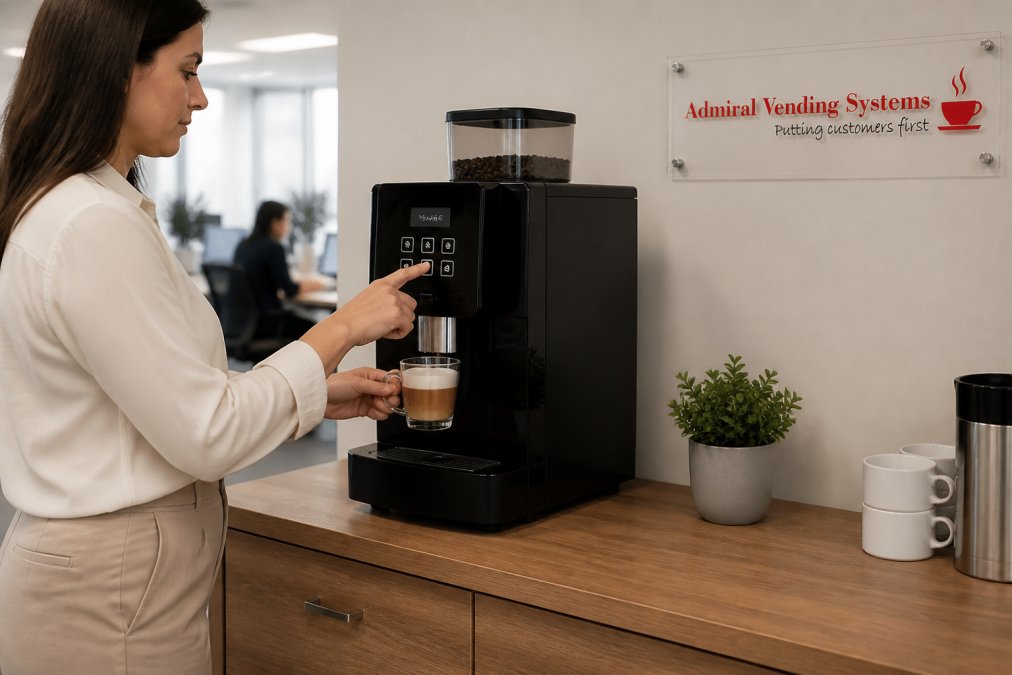
The Coffetek Vitro S1 Evo is purpose-built for small offices. Its compact footprint fits standard break-room worktops without dominating the space. The machine grinds fresh beans and delivers consistent espresso, americano, cappuccino, and latte.
Pros:
- Compact design fits tight spaces
- Consistent drink quality
- Simple maintenance routine
- Reliable performance
Cons:
- Small water tank requires frequent refilling
- Limited drink customisation options
- Requires professional installation
Fast Espresso for Small Teams: Breville Bambino Plus
The Breville Bambino Plus is a semi-automatic espresso machine that heats up in just three seconds. It includes an automatic milk frother, so staff can make cappuccino and latte without manual steam wand work.
Pros:
- Extremely fast heat-up and brew time
- Professional espresso quality
- Automatic milk texturing simplifies latte and cappuccino
- Compact and stylish
Cons:
- Requires manual portafilter handling
- Steeper learning curve for staff
- No bean grinder included
Ultra-Compact Capsule Solution: Nespresso Essenza Mini
The Nespresso Essenza Mini is the smallest option here. It occupies barely 15cm of counter space and delivers espresso in seconds. The machine is dead simple: insert capsule, press button, collect cup.
Pros:
- Minimal footprint
- Zero maintenance
- Foolproof operation
- Consistent espresso quality
Cons:
- High ongoing capsule costs
- Plastic waste (unless using compostable capsules)
- Limited drink variety
Premium Drip Coffee: Technivorm Moccamaster KBGV Select
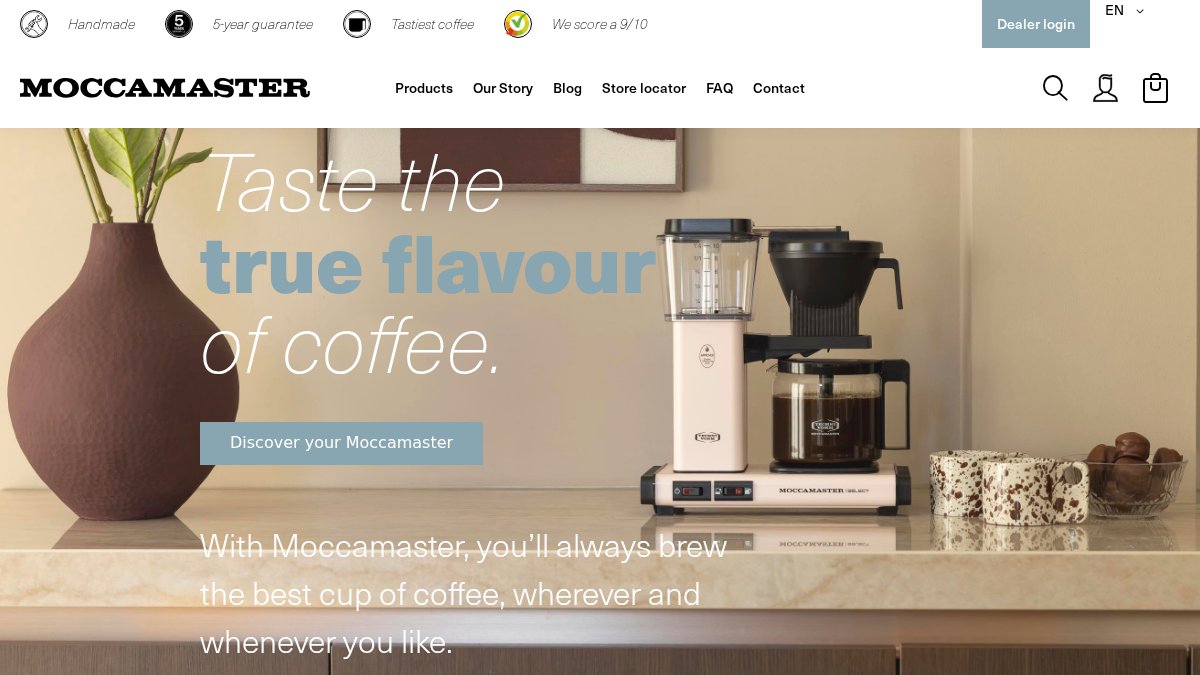
The Technivorm Moccamaster is a filter coffee machine handmade in the Netherlands. It brews large batches with precise temperature control and produces consistently excellent coffee.
Pros:
- Exceptional build quality and longevity
- Precise brewing temperature
- Excellent filter coffee results
- Sustainable (lasts decades)
Cons:
- No integrated grinder
- Requires manual brewing
- Larger footprint than espresso machines
- Not ideal for on-demand individual drinks
All-in-One Espresso with Grinder: Sage Barista Express
The Sage Barista Express combines an espresso machine with an integrated conical burr grinder. Staff grind beans and pull shots manually, creating café-quality drinks with full control.
Pros:
- All-in-one integrated grinder and machine
- Professional-grade espresso quality
- Full control over drink parameters
- Compact combined footprint
Cons:
- Steeper learning curve
- Inconsistent results if staff lack skill
- Regular maintenance required
- Higher price point
Versatile Dual Brewing: Ninja DualBrew Pro
The Ninja DualBrew Pro handles both ground coffee and pods, giving offices maximum flexibility. Make a single espresso cup with a pod or brew a full carafe with ground coffee using the same machine.
Pros:
- Dual brewing flexibility (pods and grounds)
- Built-in milk frother
- Handles single cups and batch brewing
- Versatile for mixed preferences
Cons:
- Larger footprint than single-purpose machines
- More complex operation
- Requires managing two consumable types
- Not the best at any single brewing method
| Machine | Type | Best For | Footprint | Maintenance |
|---|---|---|---|---|
| Coffetek Vitro S1 Evo | Bean-to-cup | Small offices, showrooms | Compact | Moderate |
| Breville Bambino Plus | Espresso | Speed-focused teams | Compact | Low |
| Nespresso Essenza Mini | Capsule | Minimal space, simplicity | Ultra-compact | Minimal |
| Technivorm Moccamaster | Filter | Batch brewing, quality | Medium | Low |
| Sage Barista Express | Espresso + grinder | Enthusiasts | Compact | Moderate |
| Ninja DualBrew Pro | Hybrid | Mixed preferences | Medium | Moderate |
Frequently Asked Questions
What is the best coffee machine for a small office?
The best small office coffee machine depends on your team size and preferences. Bean-to-cup machines deliver café-quality espresso, cappuccino and latte from freshly ground beans, making them ideal for offices where drink variety matters. Pod systems offer speed and simplicity with minimal cleanup. For teams under 30 people, a compact tabletop bean-to-cup or espresso machine works well. Larger small offices (40-60 people) benefit from higher-capacity tabletop machines. Consider daily cup capacity, available workspace and whether your team prefers automation or hands-on brewing when deciding.
Should I rent or buy a coffee machine for my small office?
Renting suits most small offices because it eliminates upfront capital costs and includes maintenance, repairs and consumables through a service level agreement. Buying works if you plan to keep equipment long-term and have budget for descaling supplies, water filtration and eventual repairs. Rental agreements often provide equipment replacement if machines break down, protecting your office from downtime. Buying offers more control over your exact machine choice but requires hands-on management of servicing. For small offices with variable staffing or uncertain commitment, rental provides flexibility.
How much space do I need for a small office coffee machine?
Compact bean-to-cup and espresso machines need just 30-40 centimetres of worktop width. Capsule machines like the Nespresso Essenza Mini occupy even less space. Higher-capacity tabletop machines for busy offices typically require 50-60 centimetres. Floor-standing machines suit offices with 100+ staff and minimal worktop space. Consider clearance for water refilling, bean hoppers and drip trays when measuring. Most small offices fit a machine comfortably in a break room or kitchen area without major layout changes. Professional installation ensures optimal placement for water access and electrical supply.
What are the main maintenance requirements for office coffee machines?
Daily cleaning includes emptying drip trays and rinsing group heads or brew units. Weekly descaling removes mineral buildup from water, extending machine life and improving drink quality. Bean-to-cup machines need periodic cleaning of internal pipes and milk frothing components. Water filtration cartridges require regular replacement to protect internal components and maintain taste. Most machines include automated cleaning cycles that staff can run with minimal training. Service contracts typically cover professional maintenance visits quarterly or biannually. Neglecting descaling and filtration leads to equipment reliability issues and costly downtime.
Are bean-to-cup machines better than pod machines for small offices?
Bean-to-cup machines offer superior drink variety, freshly ground coffee and lower long-term consumable costs once you account for volume. They create a more professional office environment and support workplace productivity through quality beverages. Pod systems excel in speed, simplicity and minimal training needs, making them ideal for offices where staff prefer quick service over café-style options. Bean-to-cup machines require more maintenance and descaling discipline. Pod machines generate ongoing capsule waste and higher per-drink costs. For small offices valuing quality, sustainability and staff morale, bean-to-cup delivers better value. For maximum convenience and minimal maintenance, pod systems suit smaller teams.