Table of Contents
- Why Hygiene Protocols Matter in Shared Office Kitchens
- Daily Cleaning Schedules and Routines
- Create an Office Kitchen Cleaning Checklist That Works
- How to Prevent Cross-Contamination in Shared Kitchens
- Sanitisation Schedules for Office Coffee Machines
- Hand Hygiene and Station Setup
- Waste Management and Disposal Protocols
- Building Staff Accountability and Kitchen Etiquette
- Frequently Asked Questions
Last Updated: September 30, 2026
Why Hygiene Protocols Matter in Shared Office Kitchens
Without clear essential hygiene protocols for shared office kitchens, bacteria and cross-contamination spread rapidly, causing sick staff, lost productivity, and reputational damage.
Daily Cleaning Schedules and Routines
Consistency beats intensity. Daily brief cleaning maintains hygiene better than monthly deep cleans.
Create an Office Kitchen Cleaning Checklist That Works
A checklist removes guesswork. Staff know exactly what to clean and when. No assumptions. No missed spots.

Morning Setup Tasks
Morning routines prepare the kitchen for the day ahead. This 15-minute block prevents problems before they start.
Daily morning checklist:
- Wipe down countertops with disinfectant
- Check and empty the bin
- Refill soap dispenser at sink
- Refill paper towel dispenser
- Wipe kettle exterior
- Check fridge temperature (should read 0-5°C)
- Remove any visibly expired items from fridge
- Wipe door handles with disinfectant
Midday Maintenance
Midday checklist:
- Wipe microwave interior if visibly soiled
- Wipe kettle if water splashed
- Wipe coffee machine exterior
- Empty bins if more than half full
- Wipe any spilled liquids from counters immediately
- Check fridge for any obvious spills
Assign this to one person per day. Rotate the responsibility. Make it part of their lunch routine.
End of Day Deep Clean
End of day cleaning removes what accumulated over eight hours. This is the most thorough cleaning of the day.
End of day checklist:
- Wipe all countertops with disinfectant
- Clean microwave interior thoroughly
- Clean kettle interior (descale weekly)
- Sanitise all door handles
- Sanitise fridge handles
- Empty and replace bin liners
- Sweep floor
- Mop if sticky or visibly dirty
- Wipe light switches
- Check fridge shelves for spills or expired items
How to Prevent Cross-Contamination in Shared Kitchens
Cross-contamination spreads bacteria and allergens, causing food-borne illness and allergic reactions. Prevention requires allergen awareness, labelling, separate storage, and regular surface testing. Establishing these rigorous safety standards serves as the foundational step for all staff who aim to maintain a clean office.
Allergen Awareness and Labelling
Allergens are invisible. A colleague with a peanut allergy cannot detect peanut residue on shared equipment. Labelling alone is insufficient without clear containment protocols.
Allergen labelling and containment rules:
- All personal food items must have a name and date label
- Shared foods must list major allergens: peanuts, tree nuts, sesame, milk, eggs, fish, shellfish, soy, celery, mustard, sulphites, lupin
- Use a permanent marker on tape or a label maker
- Discard unlabelled items after 48 hours
- Post an allergen notice on the fridge door with common allergens listed
- High-allergen foods (peanuts, tree nuts, sesame) must be stored in sealed, clearly labelled containers on a dedicated shelf
- Never store high-allergen foods above ready-to-eat items (prevents drips and cross-contact)
Dedicated Allergen-Free Equipment
Designate separate allergen-free chopping boards and utensils, marked clearly and stored separately from general equipment.
Allergen-free equipment protocol:
- Designate one chopping board, knife, and cutting surface as allergen-free
- Label these items with a distinctive colour or permanent marker (e.g., “Allergen-Free Only”)
- Store in a separate drawer or container away from general utensils
- Clean these items immediately after use with hot soapy water
- Never use allergen-free equipment for high-allergen foods
- Inspect equipment weekly for cracks or damage that could harbour allergen particles
Separate Storage Protocols
Storage separation rules:
- Raw meat and poultry go on the lowest shelf (prevents drips onto other foods)
- Ready-to-eat foods go on upper shelves, away from raw products
- Dairy products go in their own section if possible
- High-allergen foods (peanuts, tree nuts, sesame) go on a separate, clearly labelled shelf
- Condiments should have dedicated shelf space
- Cleaning products and personal items must never share fridge space
- Use separate chopping boards for raw meat, vegetables, and allergen-free preparation
- Label boards with permanent marker or colour coding (red for raw meat, green for vegetables, blue for allergen-free)
- Wipe fridge shelves with disinfectant weekly to remove allergen particles and bacterial residue
Risk Assessment and Incident Response
Even with protocols in place, cross-contamination can occur. A risk assessment identifies vulnerable points. An incident response plan minimises harm.
Cross-contamination risk assessment:
- Identify which staff members have allergies or intolerances
- Map high-risk foods commonly brought into the kitchen
- Assess fridge layout for potential allergen drips or contact
- Review cleaning frequency for high-touch surfaces (fridge handles, shelves, utensils)
- Identify staff who prepare food regularly and ensure they understand allergen protocols
Incident response protocol:
- Document the incident in writing (date, time, foods involved, surfaces affected)
- Provide first aid or medical support immediately if needed
- Isolate the contaminated food or surface
- Deep clean all affected areas with disinfectant
- Review what went wrong (was a protocol missed? Was equipment mislabelled?)
- Communicate findings to relevant staff without naming the affected individual
- Reinforce protocols in a team meeting if needed
- Keep incident records for at least 12 months
Sanitisation Schedules for Office Coffee Machines
Coffee machines harbour bacteria in water tanks, pipes, and group heads. Neglect spreads illness to dozens of staff.
Daily Machine Maintenance
Daily coffee machine tasks:
- Purge the group head (run water through it without a cup)
- Wipe the group head with a damp cloth
- Empty and rinse the drip tray
- Wipe the exterior with a damp cloth
- Check the water level in the tank
Weekly Deep Cleaning Protocol
Weekly sanitisation steps:
- Backflush the group head with a blind basket (no coffee) for 10 seconds
- Soak group head seals in hot water for 15 minutes
- Run cleaning solution through the group head and into the drip tray
- Wipe all external surfaces with disinfectant
- Empty, rinse, and refill the water tank
- Run water through the machine to flush cleaning solution
For bean to cup machines, follow manufacturer instructions and run automated cleaning cycles weekly.
Hand Hygiene and Station Setup
Hand hygiene is the foundation of kitchen safety; contaminated hands spread bacteria to every surface.
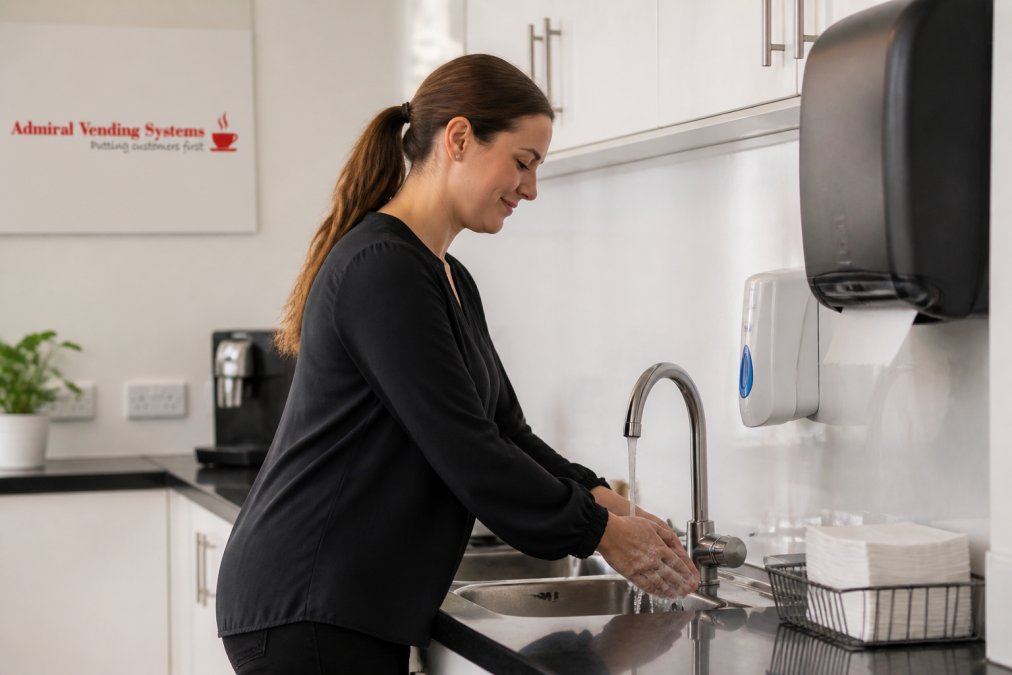
A convenient, well-stocked hand washing station increases compliance.
Hand washing station requirements:
- Warm running water
- Liquid soap dispenser (refilled weekly)
- Paper towels (not cloth towels, which spread bacteria)
- Hand sanitiser (alcohol-based, 60% minimum)
- Signage reminding staff to wash hands
- Nail brush for staff handling food
Encourage hand washing at key moments:
- Before eating or preparing food
- After using the toilet
- After touching communal surfaces
- After handling raw food
- After taking out the rubbish
Make it a habit, not an afterthought.
Waste Management and Disposal Protocols
Waste management prevents pest infestations, bacteria spread, and environmental harm. A robust protocol balances hygiene, sustainability, and practicality.
Bin Infrastructure and Daily Management
Bin requirements:
- Use bins with tight-fitting lids to contain odours and prevent pest access
- Provide separate bins for food waste, general waste, and recycling
- Position bins away from food storage areas (minimum 1 metre)
- Use bin liners to contain liquids and odours
- Empty bins daily, or twice daily if food waste volume is high
- Clean bin exteriors weekly with disinfectant
- Never leave food scraps on counters overnight
Label bins clearly and use colour coding (green for food waste, grey for general waste, blue for recycling) to reduce contamination and improve sorting.
Food Waste Segregation and Composting
Food waste management:
- Separate food waste from general waste in a dedicated bin
- Line food waste bins with compostable liners or newspaper to contain liquids
- Empty food waste bins daily (or twice daily in warm weather)
- If your office uses a composting service, place the food waste bin in a designated collection area
- Educate staff on what can be composted: fruit and vegetable scraps, tea bags, coffee grounds, eggshells, bread, rice, pasta
- Educate staff on what cannot be composted: meat, fish, dairy, oils, cooked foods (unless your composting service accepts them, check first)
- Post a visual guide near the food waste bin showing acceptable items
Confirm collection frequency with your composting provider. A full uncollected bin becomes a hygiene and pest risk.
Recycling Contamination and Sorting
Contaminated recycling contaminates entire batches. Clear protocols reduce contamination.
Recycling best practice:
- Provide clearly labelled recycling bins for paper, cardboard, plastics, and glass
- Educate staff to rinse containers before placing them in recycling bins
- Remove food residue from packaging before recycling
- Do not place food-soiled paper or cardboard in recycling (e.g., pizza boxes with grease)
- Separate plastic bags from loose items (plastic bags jam sorting machinery)
- Keep recycling bins away from food waste bins to prevent cross-contamination
- Empty recycling bins weekly or as needed
Post a visual recycling guide with photos of acceptable and unacceptable items. Many staff don’t know greasy pizza boxes or yoghurt pots contaminate entire loads.
General Waste and Packaging
General waste protocol:
- Use a separate bin for general waste (not food waste, not recycling)
- Empty daily to prevent odours and pest attraction
- Replace bin liners after emptying
- Keep this bin away from food preparation areas if possible
- Do not overfill bins; full bins attract pests and create spillage risk
Waste Volume Reduction
Waste reduction strategies:
- Encourage staff to bring reusable lunch containers instead of disposable packaging
- Provide reusable mugs and plates; discourage single-use cups and plates
- Buy food and supplies in bulk to reduce packaging waste
- Use refillable soap and paper towel dispensers instead of individual bottles
- Compost or donate food items nearing expiry instead of discarding them
- Review what food items are wasted most frequently; adjust purchasing accordingly
Pest Prevention Through Waste Management
Pest prevention measures:
- Keep bins sealed and away from food storage
- Empty food waste bins daily without fail
- Clean bin exteriors and surrounding floor weekly
- Do not leave food scraps, crumbs, or spills on counters or floors overnight
- Inspect the kitchen weekly for signs of pests (droppings, gnaw marks, unusual odours)
- Report pest sightings to facilities management immediately
- If pests are found, arrange professional pest control and deep clean the kitchen
- Seal gaps around pipes and baseboards where pests can enter
Prevention through rigorous waste management is far more cost effective than remediation.
Building Staff Accountability and Kitchen Etiquette
Hygiene protocols fail without accountability. Staff must understand why rules exist and consequences of breaking them.
| Task | Frequency | Time Required | Responsibility |
|---|---|---|---|
| Morning setup | Daily | 15 minutes | Rotating staff |
| Midday maintenance | Daily | 10 minutes | Rotating staff |
| End of day deep clean | Daily | 25-30 minutes | Rotating staff |
| Weekly coffee machine deep clean | Weekly | 20 minutes | Designated person |
| Monthly fridge deep clean | Monthly | 45 minutes | Facilities team |
| Quarterly equipment inspection | Quarterly | 30 minutes | Facilities manager |
Frequently Asked Questions
What are the most important hygiene rules for a shared office kitchen?
The five core rules are: clean surfaces immediately after use, store food properly with labels and dates, wash hands before and after handling food, prevent cross-contamination by using separate utensils for different foods, and dispose of waste correctly. Regular sanitisation of communal surfaces like fridges, kettles, and coffee machines prevents bacteria build-up and foodborne illness. Establishing a cleaning schedule and holding staff accountable ensures compliance.
How often should office kitchen appliances be deep cleaned?
Shared appliances should be deep cleaned weekly as part of your sanitisation schedule. High-traffic items like kettles, microwaves, and coffee machines need daily wiping of external surfaces and weekly internal sanitisation. Coffee machines in particular require consistent maintenance to prevent pathogen control issues. Daily sanitising solutions remove surface bacteria, while weekly deep cleaning addresses bacteria build-up inside equipment.
How do you prevent cross-contamination in a shared kitchen?
Prevent cross-contamination by using separate chopping boards and utensils for different food types, labelling all food with dates and contents, storing raw and ready-to-eat foods on different shelves, and cleaning surfaces between tasks. Allergen awareness is critical, clearly label foods containing common allergens and use dedicated storage areas. Implement hand hygiene protocols and ensure staff understand why these preventative maintenance steps matter for workplace health and food safety.
What should be included in an office kitchen cleaning checklist?
A comprehensive office kitchen cleaning checklist should include: wiping down communal surfaces daily, cleaning inside the fridge and removing expired items, sanitising the microwave and kettle, disinfecting door handles and light switches, emptying bins and replacing liners, washing dishes immediately, and checking food storage labels. Assign responsibility for each task and include weekly deep cleaning of appliances. Digital signage reminding staff of hygiene protocols helps maintain compliance and reduces the need for management follow-up.