Table of Contents
- Why Serving Fresh Hot Drinks On Demand Matters in Hospitality
- Choosing Commercial Bean to Cup Coffee Machines for Your Operation
- Meeting Hospitality Beverage Service Standards
- Designing Workflow for High Volume Demand
- Coffee Machine Maintenance for Hospitality Environments
- Offering Customised Flavour Led Beverage Menus
- Sustainability and Waste Reduction in Hot Drink Service
- Measuring Success: Guest Satisfaction and Operational Efficiency
- Frequently Asked Questions
Last Updated: October 2, 2026
Why Serving Fresh Hot Drinks On Demand Matters in Hospitality
The difference between a forgettable guest experience and a memorable one often comes down to small details. The ability to serve fresh hot drinks on demand is one of them. When a hotel guest, restaurant client, or office visitor can access a barista-quality cappuccino or espresso within seconds, it signals professionalism. It shows you’ve invested in their comfort.
Hospitality management is fundamentally about creating moments that guests remember. A slow, inconsistent beverage service erodes that experience. Long queues at a coffee station waste staff time. Lukewarm drinks damage your reputation. When you serve fresh hot drinks on demand, you’re solving three problems at once: speed, quality, and perceived value.
The stakes are real. In competitive hospitality environments, beverage service is no longer a side function. It’s a touchpoint that influences guest satisfaction, staff morale, and operational efficiency. Hotels use premium coffee programs to justify room rates. Restaurants build loyalty through specialty drinks. Corporate offices boost productivity when employees don’t need to leave the building for decent coffee.
This guide covers how to design a beverage program that delivers on all three fronts. We’ll look at equipment selection, workflow optimization, maintenance protocols, and how to measure what actually matters: guest satisfaction and operational efficiency.
Choosing Commercial Bean to Cup Coffee Machines for Your Operation
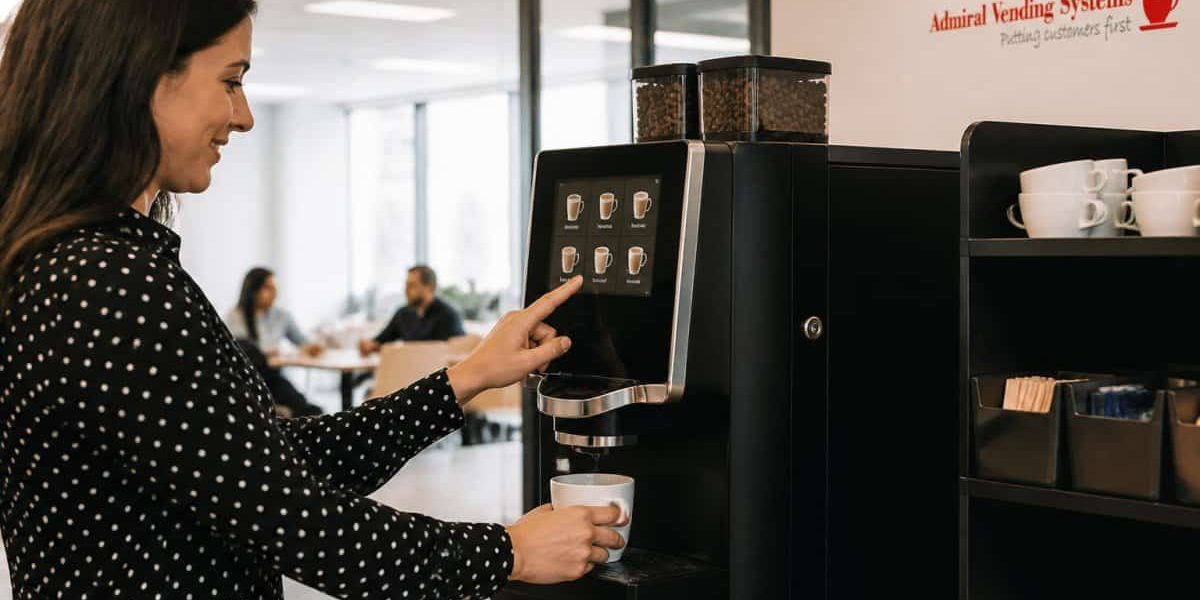
The right machine is the foundation of a reliable beverage service. Bean to cup technology grinds fresh beans on demand, which eliminates the inconsistency of pre-ground coffee and the labour intensity of manual espresso machines. For hospitality environments, this matters enormously.
Admiral Vending supplies commercial bean to cup coffee machines across the UK, backed by eight years of experience working with hotels, restaurants, and large corporate sites. The choice between different machines depends on three factors: your volume requirements, your desired drink variety, and your space constraints.
Capacity and Volume Requirements
Start by counting your actual demand, not your optimistic estimate. A hotel with 150 guests might see 80 to 120 coffee requests during breakfast service alone. A showroom with steady foot traffic needs machines that can produce 200 to 400 drinks per day. A factory floor with shift changes might need 500 to 800 drinks daily.
Undersizing your machine guarantees failure. Staff will abandon it during peak times. Guests will wait too long. The machine will overheat from continuous use. Oversizing wastes capital and floor space.
Commercial bean to cup machines come in three categories:
- Tabletop machines for lower volumes (50 to 150 drinks per day): Compact footprint, suitable for meeting rooms, smaller offices, or showrooms with moderate traffic
- Higher capacity tabletop machines (150 to 400 drinks per day): Larger water tanks and bean hoppers, designed for busy offices and commercial workplaces
- Floor standing machines (400+ drinks per day): Heavy duty construction, fastest recovery times between drinks, ideal for hospitality venues with high footfall
Choose based on your peak hour demand, not your average. If your busiest hour requires 30 drinks, your machine must reliably produce 30 drinks in 60 minutes. Most commercial machines take 45 to 90 seconds per drink when fully warmed. A floor standing machine will recover faster and handle back to back orders without performance degradation.
Barista Quality Output and Drink Variety
Hospitality guests expect café-standard drinks. This means proper espresso extraction, microfoam on cappuccinos, and consistent temperature. A bean to cup machine that produces weak, watery coffee will damage your reputation faster than no machine at all.
Quality depends on three technical factors: grind consistency, water temperature, and pressure. Commercial bean to cup machines maintain these parameters automatically. You don’t need a trained barista. The machine handles the complexity.
Drink variety is your second consideration. Most commercial machines produce espresso, americano, cappuccino, and latte. Many add hot chocolate. Selected models offer fresh brew tea, which is increasingly important in hospitality settings where not all guests want coffee.
The broader your menu, the more flexibility you have during service. A machine limited to three drinks will frustrate guests who want alternatives. A machine offering six or more drink types becomes a genuine service asset.
Meeting Hospitality Beverage Service Standards
Consistency separates professional hospitality from amateur operations. A guest who receives a perfect cappuccino on Monday expects the same quality on Tuesday. Inconsistency signals poor management.

Consistency in Every Cup
Consistency starts with bean quality and freshness. Stale beans produce flat, bitter coffee. Fresh beans produce bright, clean flavour. Commercial bean to cup machines grind on demand, which means every drink uses freshly ground coffee. This is your baseline advantage over traditional espresso machines using pre ground coffee.
Temperature consistency matters equally. Milk based drinks require milk heated to 60 to 65 degrees Celsius. Too hot and you scald the milk. Too cold and the drink tastes thin. Commercial machines maintain precise water temperature, removing the human error that plagues manual machines.
Portion consistency is the third factor. Every espresso shot should contain the same amount of coffee. Every cappuccino should have the same milk to coffee ratio. Consistency breeds confidence. Guests know what to expect.
To maintain consistency:
- Calibrate your machine monthly according to manufacturer guidance
- Use the same bean supplier continuously (switching suppliers changes flavour)
- Train staff to use the machine identically (same cup size, same button sequence)
- Monitor water quality (mineral content affects extraction and machine longevity)
Speed Without Compromise
In hospitality, speed and quality are not trade offs. A guest will wait 90 seconds for an excellent cappuccino. They will not wait 2 minutes for a mediocre one.
Commercial bean to cup machines are engineered for speed. Most produce a drink in 45 to 90 seconds from button press to cup. This includes grinding, tamping, extracting, and steaming milk. The machine does the work. Staff simply hand the cup to the guest.
Speed depends on your machine’s water heating capacity and recovery time. Floor standing machines heat water faster and recover faster between drinks. During peak service, this difference is measurable. A machine that takes 2 minutes between drinks creates bottlenecks. A machine that recovers in 30 seconds keeps the queue moving.
Designing Workflow for High Volume Demand
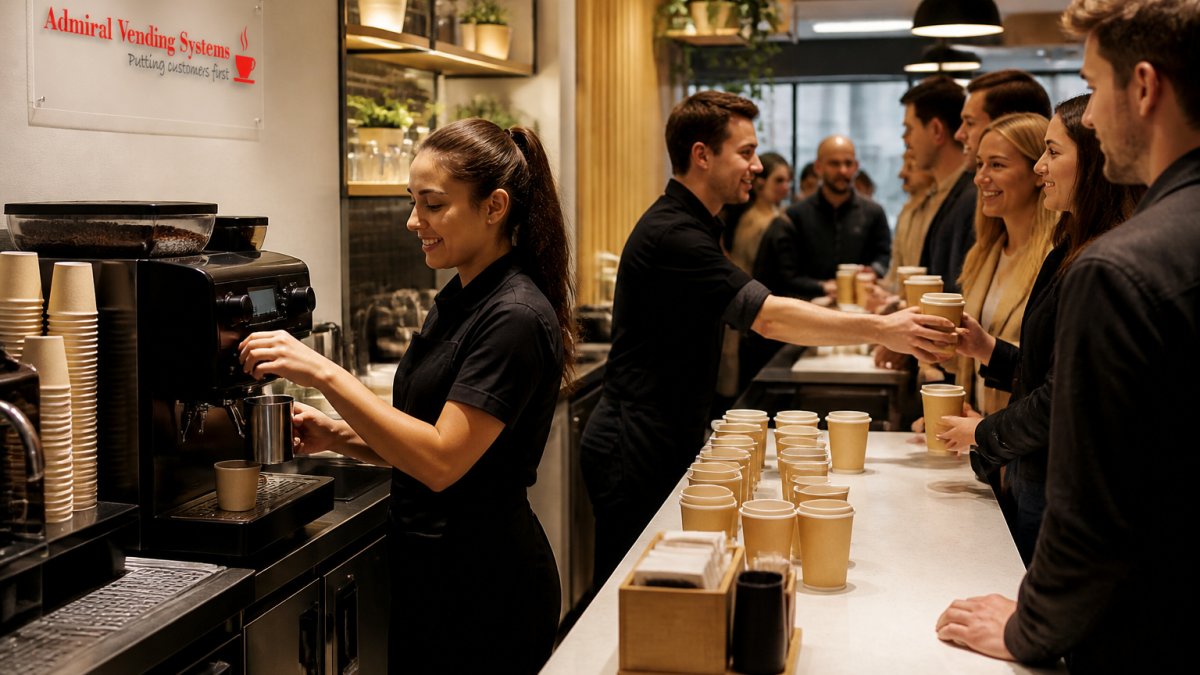
Peak service times expose workflow weaknesses. During breakfast rush at a hotel or lunch service at a restaurant, a poorly designed beverage station becomes a bottleneck.
Coffee Machine Maintenance for Hospitality Environments
A machine that breaks down during peak service is worse than no machine at all. Maintenance is not a cost to minimize. It’s a service investment that protects your reputation.
Daily and Weekly Hygiene Protocols
Daily cleaning prevents bacterial growth and maintains flavour quality. Milk residue in steam wands becomes rancid within hours. Coffee oil buildup in group heads produces bitter, stale tasting shots.
Daily procedures:
- Purge the group head (run water through it without a portafilter) to clear coffee grounds
- Clean the steam wand immediately after steaming milk (wipe with damp cloth, purge steam)
- Empty and rinse the drip tray
- Check water level in the tank
Weekly procedures:
- Soak the portafilter and basket in hot water with cleaning powder
- Backflush the group head with a blind basket to remove trapped oils
- Deep clean the steam wand with a thin brush to clear milk buildup
- Check that water pressure is within the manufacturer’s specified range
Preventative Care and Reliability
Beyond daily cleaning, commercial machines need professional servicing annually. A technician will descale the internal water pathways, check pressure settings, inspect seals, and replace any worn components. This prevents expensive failures and extends machine life.
Offering Customised Flavour Led Beverage Menus
Guest preferences vary widely. Some want espresso. Others want milk based drinks. Some prefer plant based milk. A customised menu acknowledges this diversity and increases satisfaction.
- Two or three milk types (dairy, oat, almond)
- Flavour syrups (vanilla, caramel, hazelnut)
- Drink size options (small, medium, large)
- Temperature control (hot or warm)
Sustainability and Waste Reduction in Hot Drink Service
Hospitality venues generate significant waste through beverage service. Disposable cups, milk packaging, and spent coffee grounds add up quickly. Sustainability is increasingly important to guests and staff.
Measuring Success: Guest Satisfaction and Operational Efficiency
You cannot improve what you don’t measure. Beverage service success has two components: how guests perceive it and how efficiently you deliver it.
Frequently Asked Questions
How can you serve fresh hot drinks on demand without creating bottlenecks during peak times?
Invest in commercial bean to cup coffee machines with sufficient capacity for your guest volume. Position equipment strategically so multiple staff can access it simultaneously. Train staff on efficient drink preparation workflows and use machines that deliver barista quality output in under 90 seconds. Stagger break times and pre program popular drinks to reduce decision time during rush periods. High capacity machines designed for hospitality environments can handle 300+ drinks daily without compromising quality or speed.
What maintenance schedule keeps hospitality beverage service standards consistent?
Daily cleaning of group heads and milk frothers prevents flavour contamination. Weekly deep cleaning of internal pathways removes mineral buildup that affects taste and machine performance. Monthly descaling protects equipment longevity and ensures consistent extraction temperatures. Quarterly professional servicing catches wear before it impacts quality. Establish a documented hygiene log and assign staff responsibility to track maintenance. Most hospitality venues find that consistent maintenance reduces equipment downtime and extends machine lifespan.
Can smaller operations like 40 person SMEs justify investing in commercial equipment?
Yes. Compact tabletop bean to cup machines serve smaller operations efficiently without wasting capacity. These deliver the same barista quality as floor standing units but fit office kitchens or break rooms. They reduce staff time spent queuing for external coffee, which improves productivity across your operation. The return comes through reduced external spend, improved morale, and enhanced client perception when serving premium drinks. Equipment selection depends on your daily volume, not your headcount, so Admiral Vending can match solutions to your actual demand.
What makes commercial bean to cup coffee machines different from consumer models?
Commercial machines are engineered for 200+ drinks daily with durability rated for continuous use in high traffic environments. They deliver consistent extraction, precise temperature control, and milk frothing quality that matches café standards. Consumer models lack the redundancy needed if equipment fails during service. Commercial units include professional support, spare parts availability, and operator training. They’re designed to maintain hospitality beverage service standards under real world pressure, whereas consumer equipment cannot sustain that demand.