Table of Contents
- What Makes a Commercial Coffee Machine Reliable
- Types of Commercial Coffee Machines and Their Reliability Profiles
- Commercial Coffee Machine Maintenance Schedule for Peak Performance
- Bean to Cup Coffee Machine Troubleshooting and Common Failures
- Commercial Coffee Machine Service Contracts and Support
- Assessing Your Business Needs for Reliable Service
- Total Cost of Ownership and Long Term Reliability Investment
- Frequently Asked Questions
Last Updated: September 18, 2026
What Makes a Commercial Coffee Machine Reliable
Commercial coffee machine reliability means consistently delivering the same quality drink, shift after shift, without unexpected breakdowns that disrupt your business. Reliability isn’t about having the fanciest features, it’s about predictable performance under heavy daily use, minimal downtime, and affordable maintenance that doesn’t surprise you mid-month.
At Admiral Vending, we’ve spent eight years helping businesses choose machines that actually last. The difference between a machine that serves 50 drinks a day for five years and one that fails after 18 months comes down to build quality, boiler capacity, and how well the manufacturer supports what they’ve sold you.
Most businesses underestimate the true cost of unreliability. A broken machine doesn’t just mean no coffee, it means frustrated staff, lost productivity, and the scramble to find a repair technician who can visit quickly. Machines with strong commercial coffee machine reliability share specific characteristics: strong group heads that maintain thermal stability, boiler designs that resist scale buildup, and service contracts that guarantee response times when things do go wrong.
The most reliable machines aren’t always the most expensive ones. Look for models with proven track records in high-volume environments, hotels, offices with 150+ staff, factory floors. If a machine thrives there, it will easily handle your needs.
Types of Commercial Coffee Machines and Their Reliability Profiles
Different machine types fail in different ways. Understanding what you’re buying helps you predict maintenance costs and downtime risk before you commit.
Bean to Cup Machines
Bean to cup machines grind fresh beans on demand and brew each drink individually. They’re popular in offices because they’re simple to use, staff just press a button. From a reliability perspective, bean to cup machines shift the complexity inward: the grinder, the brewing mechanism, and the cleaning cycles all happen automatically. Maintaining this internal automation requires a consistent approach to selecting fresh beans to ensure the mechanical components remain free from the oils and residues that often lead to premature system failure.
The critical reliability factor here is the automated cleaning cycle. If the machine doesn’t flush itself properly after each drink, oils and residue build up inside the group head and pipework. Within weeks, you get inconsistent extractions, blocked nozzles, and eventually a machine that won’t brew at all. The best bean to cup models have aggressive cleaning protocols that run without user intervention.
Scale buildup is another common failure point. Hard water deposits accumulate in the boiler and heating elements. A machine without good water filtration will need descaling regularly. Machines with built-in filtration systems can extend the time between descales. Over a year, that’s the difference between a predictable maintenance routine and constant intervention.
Bean to cup machines also depend heavily on spare parts availability. If your machine needs a new group head or pump, how quickly can the manufacturer supply it? Machines from established suppliers with nationwide support networks stay operational. Obscure brands with slow parts delivery become expensive liabilities.
Traditional Espresso Machines
Traditional espresso machines, the kind with group heads where baristas pull shots manually, are mechanically simpler but demand more skill to operate consistently. They have fewer automated systems, which means fewer things to break, but the operator’s technique directly affects reliability of the drink quality.
The boiler is the heart of a traditional machine. Machines with separate brew and steam boilers maintain thermal stability better than single boiler designs. A stable boiler temperature means consistent extraction, which means fewer complaints and less pressure on staff to troubleshoot why today’s coffee tastes different from yesterday’s.
Rotary pumps are more reliable than vibration pumps in high-volume settings. A rotary pump delivers steady pressure over time. A vibration pump works fine for occasional use but degrades faster under constant demand. If your business needs hundreds of drinks daily, the pump type matters.
Traditional machines also require skilled operators. A poorly maintained group head or a barista who doesn’t backflush the portafilter regularly will shorten the machine’s lifespan. This is a hidden reliability cost: staff training and discipline affect how long your equipment lasts.
Bean to cup machines suit businesses where consistency and ease of use matter more than operator skill. Traditional espresso machines suit environments where you have trained staff and want maximum control over the final drink.
Commercial Coffee Machine Maintenance Schedule for Peak Performance
A maintenance schedule isn’t optional, it’s the difference between a machine that lasts five years and one that fails in two. The schedule depends on your daily output and water quality, but the principle is the same: preventative maintenance costs far less than emergency repairs.
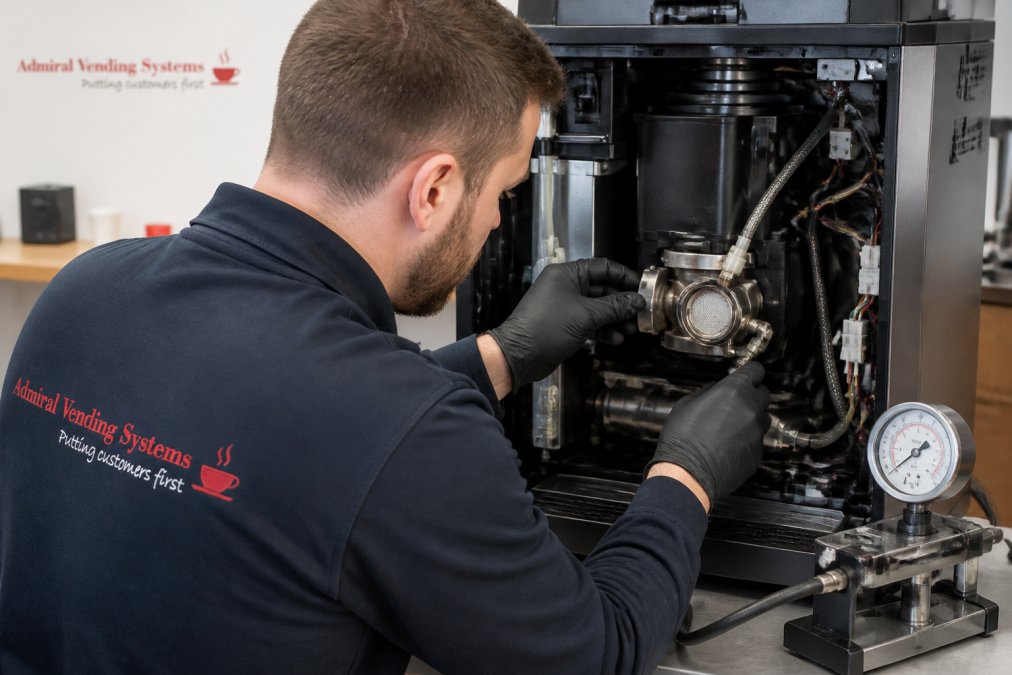
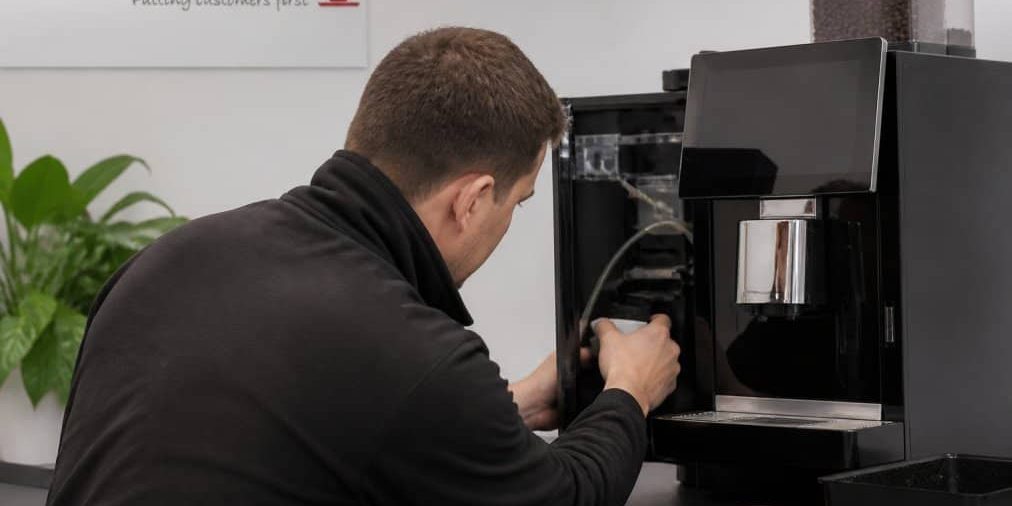
Daily maintenance takes 10-15 minutes and prevents most failures. Backflushing the group head removes old coffee oils. Purging the group head before the first drink of the day clears water that’s been sitting overnight. Wiping the portafilter and basket keeps grounds from drying and damaging seals. These tasks are simple but critical, skip them for a week and you’ll notice the machine performing worse.
Weekly maintenance includes deep cleaning of removable parts. The shower screen, dispersion plate, and basket need soaking in cleaning solution to remove built-up residue.
Many businesses skip monthly descaling to save money. The real cost emerges later: a blocked heating element that fails completely, or a pump that burns out because it’s working against scale resistance. One emergency repair costs more than a year of preventative descaling.
Bean to Cup Coffee Machine Troubleshooting and Common Failures
Bean to cup machines fail in predictable ways. Knowing what to look for helps you distinguish between a quick fix and a problem that needs professional support.

Commercial Coffee Machine Service Contracts and Support
A service contract is where reliability becomes real. The best machine in the world is useless if you can’t get it fixed when it breaks.
Assessing Your Business Needs for Reliable Service
Choosing the right machine for your situation prevents buying something that’s either overkill or undersized for your needs.
Businesses with 50-150 staff in a single location, stable daily demand, and access to mains water and power. These conditions let you choose from the widest range of reliable machines.
Total Cost of Ownership and Long Term Reliability Investment
The purchase price is only a portion of what you’ll spend on a machine over its lifespan. The rest goes to maintenance, repairs, and service contracts.
Calculate your total cost of ownership by adding:
- Purchase price
- Installation and training
- Annual service contract
- Estimated repair costs (parts and labour)
- Descaling and cleaning supplies
- Energy consumption
- Water and waste disposal
| Factor | Impact on Reliability | Cost Implication |
|---|---|---|
| Build quality | Higher quality = fewer failures | Higher upfront, lower long-term |
| Boiler capacity | Larger boiler = better thermal stability | Slight premium, major durability gain |
| Water filtration | Built-in filtration = less descaling | Higher upfront, lower maintenance |
| Service contract scope | Parts and labour included = predictable costs | Higher annual fee, no surprise bills |
| Spare parts availability | UK stock = faster repairs | Support from established suppliers |
| Preventative maintenance | Quarterly visits = fewer emergencies | Moderate annual cost, major reliability gain |
Frequently Asked Questions
What are the most common causes of commercial coffee machine failure?
Scale buildup from hard water is the leading cause of downtime in commercial coffee machines. Without proper water filtration and preventative maintenance, mineral deposits block group heads and internal passages, forcing expensive repairs. Thermal stability problems, worn pump components, and inadequate cleaning cycles also contribute to premature failure. Regular servicing and descaling prevent most issues.
How often should a commercial coffee machine be serviced?
Daily cleaning of group heads and portafilters is essential. Weekly deep cleaning of the water system and boiler prevents scale buildup. Most commercial machines need professional servicing every three to six months depending on water hardness and daily output. High-volume environments serving hundreds of drinks daily require more frequent service intervals to maintain extraction consistency and prevent downtime.
What features indicate a high-reliability commercial coffee machine?
Look for machines with rotary pumps rather than vibration pumps, larger boiler capacity for thermal stability, commercial-grade build quality, and automated cleaning cycles. Machines with proven spare parts availability and established service networks reduce downtime. Warranty coverage and manufacturer technical support matter significantly. Bean to cup machines with user-friendly interfaces reduce operator error and extend machine lifespan.
How does water quality affect commercial coffee machine reliability?
Water hardness directly impacts scale buildup and machine longevity. Hard water accelerates mineral deposits in boilers, group heads, and internal passages, reducing thermal stability and extraction consistency. Plumbed-in machines with integrated water filtration systems significantly extend machine lifespan and reduce maintenance costs. Without proper filtration, even premium machines experience premature failure and frequent downtime.
What is the expected lifespan of a professional bean to cup machine?
Well-maintained commercial bean to cup machines can have a long lifespan in standard office environments. High-volume hospitality settings with hundreds of daily drinks may see shorter lifespans due to intensive use. Machines with superior build quality, preventative maintenance schedules, and reliable service contracts consistently perform well. Proper water filtration and routine servicing are key factors in achieving maximum machine lifespan.
What should be included in a commercial coffee machine service contract?
A comprehensive service contract should cover preventative maintenance visits, parts replacement, emergency callout support, and technical assistance. The contract should specify response times for breakdowns, include water filtration replacement, and cover descaling and cleaning cycles. Clarity on what happens after the initial period and whether fees increase is essential. Reliable service contracts guarantee workflow efficiency and minimise downtime in busy commercial environments.
Choosing a reliable commercial coffee machine means prioritising build quality, proper maintenance, and strong support over flashy features you don’t need. A machine that consistently delivers good coffee, stays operational, and costs predictably to maintain is worth more than any alternative. Admiral Vending has helped businesses across the UK find machines that work hard for years. Get your instant quote today and discover how the right equipment transforms your workplace coffee service.