Table of Contents
- Daily Maintenance Routines for Industrial Coffee Equipment
- Commercial Coffee Machine Cleaning Checklist: Weekly and Monthly Deep Cleaning
- How to Descale a Commercial Coffee Machine and Prevent Limescale Buildup
- Coffee Machine Milk System Cleaning: Daily and Weekly Steps
- Commercial Coffee Machine Servicing: When to Call a Professional
- Safety, Lockout Procedures and Water Quality for Industrial Coffee Equipment
- Frequently Asked Questions
Last Updated: October 7, 2026
Daily Maintenance Routines for Industrial Coffee Equipment
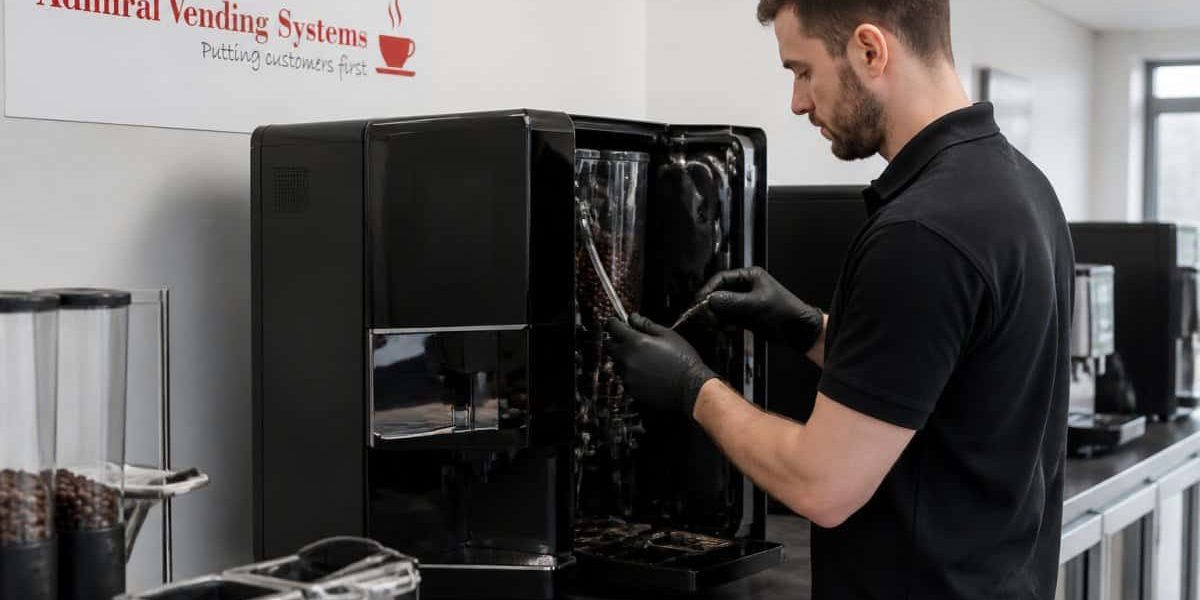
Essential maintenance tips for industrial coffee equipment start with the same truth every day: fresh coffee depends on clean hardware. A dirty machine cannot make a good drink, no matter how good the beans are. This guide from Admiral Vending covers the daily, weekly and monthly habits that keep commercial machines running. We supply and support bean to cup systems across the country, so we see what happens when cleaning slips. Below, we break down each task, how long it takes and what goes wrong if you skip it.
Daily care takes about 15 minutes. That small window protects flavour, speed and equipment lifespan.
Rinsing Group Heads and Purging Steam Wands
Rinse the group head at the start and end of every shift. Coffee oils and milk residue build up fast on hot metal. Left alone, they turn bitter and taint every drink.
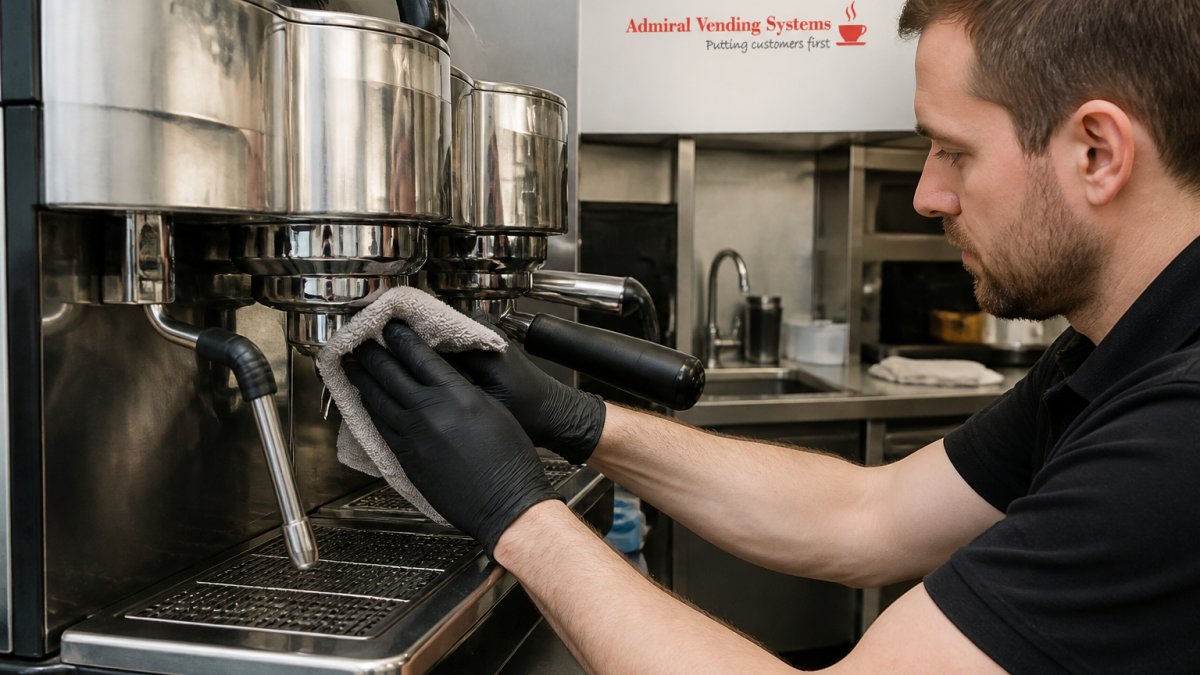
Run a short rinse cycle through the group head. Then wipe the shower screen with a clean cloth.
Purge the steam wand after every milk drink. Wipe it down straight away, while the residue is still soft. Dried milk is far harder to remove later.
- Rinse group heads twice a day
- Purge and wipe steam wands after each use
- Never let milk sit on the wand
Wipe the steam wand the second you finish steaming. Waiting even a few minutes lets milk residue set hard, and that is when blockages start.
Emptying Drip Trays and Grounds Containers
Empty the drip tray and grounds container daily, even if they are not full. Old grounds hold moisture and smell. That smell drifts into the cup.
Rinse both parts with warm soapy water, then dry them fully before refitting. A damp tray encourages mould.
Commercial Coffee Machine Cleaning Checklist: Weekly and Monthly Deep Cleaning
A commercial coffee machine cleaning checklist splits work into weekly and monthly jobs. Weekly tasks handle surfaces and moving parts. Monthly tasks target the internals where scale and oils collect. Follow both, and the machine stays consistent.

Weekly jobs take around 30 minutes:
- Remove and soak the portafilter and filter baskets
- Scrub the group head with a soft brush
- Clean the drip tray and grounds container more thoroughly
- Wipe down the exterior and the steam wand
- Check the water tank or reservoir
Backflushing and Cleaning Portafilters and Filter Baskets
Backflushing forces water back through the group head to clear trapped oils. Use an espresso machine cleaner made for the job, and follow the manufacturer guidelines. Never guess the dose.
Soak portafilters and filter baskets in warm soapy water, then scrub and rinse. Check the basket holes for blockages.
| Task | Frequency | Time Needed | What It Protects |
|---|---|---|---|
| Rinse group heads | Daily | 5 minutes | Flavour, extraction consistency |
| Backflush group head | Weekly | 15 minutes | Oils, water flow |
| Clean portafilters | Weekly | 10 minutes | Extraction, hygiene |
| Descale machine | Monthly | 45 minutes | Limescale, heating elements |
| Deep clean milk system | Weekly | 20 minutes | Milk residue, hygiene |
How to Descale a Commercial Coffee Machine and Prevent Limescale Buildup
To descale a commercial coffee machine, run a descaler through the system on a set schedule. Limescale is the single biggest killer of industrial coffee equipment. It coats heating elements and narrows water paths, so the boiler works harder, heats slower and eventually fails.
The right descaling frequency depends on your water, not the calendar. Test water hardness first. A simple test strip or a lab test gives you a number in parts per million (ppm) of calcium carbonate. As a working guide:
- Below 60 ppm: soft water, descale quarterly and monitor
- 60 to 120 ppm: moderately hard, descale monthly
- 120 to 180 ppm: hard, descale every two to three weeks
- Above 180 ppm: very hard, descale weekly and fit filtration immediately
These thresholds are a common industry starting point, not a substitute for the manufacturer guidelines for your model. Always check those first.
Choosing and Replacing Water Filtration
Filtration is cheaper than descaling. A carbon filter removes chlorine and taste compounds. A scale inhibitor or ion exchange resin reduces hardness. Many commercial setups use a combined cartridge that does both.
Replace filter cartridges on the schedule the maker states, or sooner if your hardness test shows the water has changed. A common pattern is every three to six months for a busy site, but a high-volume machine on hard water may need changes more often. Log the install date on the cartridge so nobody guesses.
Running the Descale Cycle Safely
- Isolate the machine from power and let it cool.
- Empty the boiler or water tank as the manual instructs.
- Mix descaler to the dose on the label. Never guess.
- Run the cycle through the group head and steam wand.
- Flush with clean water at least twice, then test a shot before service.
Skipping descaling lets scale harden inside the boiler. Once that happens, the machine loses heat, runs slow and often needs a costly repair. Descaling on schedule is always cheaper than a boiler replacement.
Coffee Machine Milk System Cleaning: Daily and Weekly Steps
Coffee machine milk system cleaning matters because milk is the fastest source of bacteria in any machine. Rinse the milk lines daily with clean water. Then run a proper milk system cleaner weekly.
- Rinse lines after the last drink of the day
- Use a milk system cleaner weekly
- Take apart removable milk parts and soak them
- Check for milk residue in hidden corners
Poor milk hygiene affects taste and safety. If drinks start tasting sour, the milk system is the first place to look.
Commercial Coffee Machine Servicing: When to Call a Professional
Commercial coffee machine servicing should happen on a set schedule, not just when something breaks. Routine servicing catches worn seals, weak pumps and scale before they cause downtime. Many businesses find that a planned service interval costs far less than emergency repairs.
Call a professional when you notice:
- Water leaking from the machine
- Drinks coming out cold or weak
- Grinder making unusual noises
- Error codes you cannot clear
- Steam pressure dropping
These are warning signs, not minor quirks. Ignoring them rarely fixes anything. At Admiral Vending, our nationwide support keeps machines running and staff trained, so problems get sorted before they stop service. If your site runs high volumes, our Industrial Coffee Machines are built for that kind of daily demand, and our Commercial Bean to Cup Coffee Machines combine grinding, brewing and milk texturing in one unit, which means fewer separate parts to clean and maintain.
Safety, Lockout Procedures and Water Quality for Industrial Coffee Equipment
Safety comes before cleaning. Industrial coffee equipment combines hot water, steam, pressure and mains electricity, so a rushed job can cause burns, scalds or electric shock. Most practitioners find that a simple lockout routine prevents the worst incidents. Establishing these secure protocols provides the necessary foundation for the more intricate task of cleaning brewing equipment.
Lockout and Isolation Steps
- Switch off the machine at the control panel.
- Isolate the power at the wall or breaker.
- Lock the isolator or tag it so nobody restores power mid-task.
- Wait for hot parts to cool. Steam wands and group heads can stay above 60°C for several minutes after shutdown.
- Release pressure from the boiler or steam system as the manual instructs before opening anything.
- Only then remove panels or touch internal parts.
Keep a lockout padlock and tags near the machine. If your site has several machines, label each isolator clearly so staff do not switch on the wrong one.
Water Quality Testing and Filtration Selection
Water quality decides how often you descale and how long the boiler lasts. Test hardness in ppm of calcium carbonate, check for chlorine and sediment, and note any change after a water supplier switch.
Match filtration to the result:
- Soft water with chlorine: carbon filter
- Moderate to hard water: carbon and scale inhibitor cartridge
- Very hard water: ion exchange or reverse osmosis pre treatment, then a remineralisation stage if the machine requires it
Replace cartridges on the maker schedule or when a test shows hardness rising. Log every change.
Maintenance Log and Measurable Outcomes
A simple log turns guesswork into a schedule. Record:
- Date and time of each clean, backflush and descale
- Filter cartridge install and replacement dates
- Water hardness readings
- Any fault, error code or unusual noise
- Service visits and parts replaced
Track a few indicators monthly: cleaning completion rate, filter changes on time, unplanned downtime hours, and service frequency. Patterns show up fast. If descaling slips or hardness climbs, the log tells you before a breakdown does.
Isolate, cool, test, log. Four habits that protect staff, protect the machine and give you evidence when you need a technician.
Frequently Asked Questions
How often should a commercial coffee machine be descaled?
Descaling frequency depends on water hardness and daily drink volume. In hard water areas, descale every 4 to 8 weeks. In soft water areas, every 2 to 3 months may be enough. Check your manufacturer guidelines and use a water hardness test kit. If you notice reduced flow, unusual noises during heating, or scale on the steam wand, descale immediately. Regular descaling protects the boiler and keeps extraction consistent.
What daily maintenance does a commercial bean to cup coffee machine need?
Every day, rinse the group head and purge the steam wand after each milk use. Empty and wash drip trays and grounds containers. Run the automatic rinse cycle at least twice. Wipe down the exterior with a damp cloth. For milk systems, flush the milk lines with clean water at the end of service. These steps take 10 to 15 minutes and prevent milk residue and coffee oils from hardening.
How do you clean the milk system on a bean to cup coffee machine?
Daily, flush milk lines with warm water until the water runs clear. Weekly, disassemble the milk frother, soak parts in warm soapy water, scrub with a soft brush, rinse thoroughly and air dry. Use a milk system cleaner designed for coffee equipment if residue persists. Never leave milk sitting in the lines overnight. Clean milk systems prevent blockages and keep drinks tasting fresh.
When should a commercial coffee machine be professionally serviced?
Book professional servicing every 6 to 12 months, depending on usage. High volume sites may need quarterly visits. Signs you need a service sooner include unusual noises, leaks, inconsistent extraction, error codes or a drop in steam pressure. A qualified technician will inspect seals, replace worn parts, check water filtration and calibrate the grinder. Regular servicing extends equipment lifespan and reduces downtime.
Keeping industrial coffee equipment in top shape is a daily discipline, and it pays off in every cup. If cleaning and servicing feel like a burden, the right machine and support make it simple. Admiral Vending supplies commercial bean to cup coffee machines with professional installation, operator training and ongoing service support. Our AI powered instant quote system makes it easy to find the right fit for your site. Get your instant quote and serve better coffee with less hassle.