Table of Contents
- Why Coffee Bean Selection Matters for Commercial Machines
- Feature Comparison: Top 5 Coffee Beans at a Glance
- 1. Lavazza Super Crema: Consistency and Crema Production
- 2. Starbucks Pike Place Roast: The Crowd Pleaser
- 3. Peet’s Major Dickason’s Blend: Power for Milk Based Drinks
- 4. Kicking Horse Kick Ass: Ethical Sourcing and Bold Flavour
- 5. Death Wish Coffee Organic Dark Roast: Maximum Caffeine
- How to Choose the Best Coffee Beans for Bean to Cup Machines
- Practical Cost and Volume Considerations
- Why Bean Selection Affects Machine Performance
- Frequently Asked Questions
Last Updated: September 25, 2026
Why Coffee Bean Selection Matters for Commercial Machines
Selecting the right coffee beans for commercial machines directly impacts drink quality, employee satisfaction, and operational costs. The difference between mediocre espresso and exceptional café quality drinks comes down to bean quality, roast profile, and consistency.
The 5 best coffee beans for commercial machines 2026 deliver reliable crema, consistent flavour, and performance across varying water temperatures and machine calibrations.
This guide covers the top performers, how to evaluate beans for your specific operation, and practical tips for maximising extraction quality and cost efficiency.
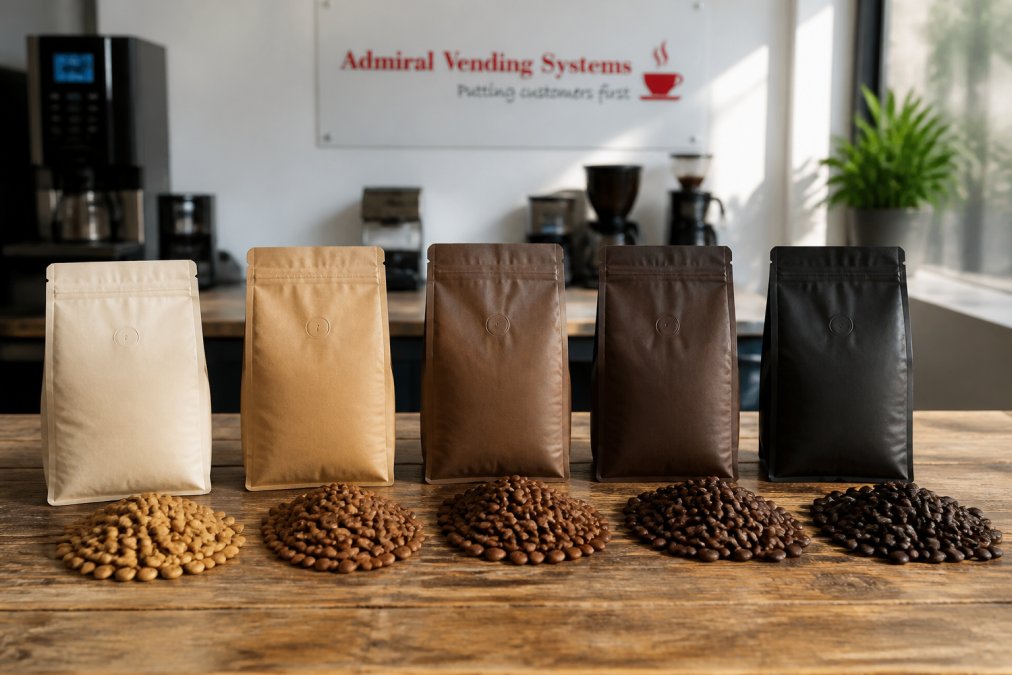
Feature Comparison: Top 5 Coffee Beans at a Glance
| Bean | Roast Level | Best For | Key Strength |
|---|---|---|---|
| Lavazza Super Crema | Medium Dark | Consistency and crema | Reliable extraction in any machine |
| Starbucks Pike Place | Medium | Crowd pleasing flavour | Familiar brand recognition |
| Peet’s Major Dickason’s | Dark | Milk based drinks | Flavour cuts through milk |
| Kicking Horse Kick Ass | Dark | Ethical sourcing | Bold taste and fair trade certified |
| Death Wish Coffee Organic | Dark | High caffeine environments | Maximum strength and energy |
1. Lavazza Super Crema: Consistency and Crema Production
Lavazza Super Crema is the workhorse of commercial coffee operations. This Italian blend combines Arabica and Robusta beans in proportions specifically designed for espresso machines, producing a thick, persistent crema that looks professional in every cup.
Lavazza Super Crema delivers consistent results across different water conditions and machine ages. The medium dark roast balances flavour complexity with extraction stability, and notes of hazelnut and brown sugar appeal broadly without polarising audiences.
Robusta content (typically 20-30%) creates the crema layer customers expect. Though specialty enthusiasts dismiss it, Robusta’s higher oil content and denser structure extract faster and produce thick crema essential for high volume operations.
Limitation: Lavazza lacks the complexity of single origin beans. For offices prioritising consistency and speed, it’s difficult to beat.
Order Lavazza in 1kg bags if you’re testing it first. Most UK suppliers stock it, and buying small quantities lets you verify it works in your specific machine before committing to bulk orders.
2. Starbucks Pike Place Roast: The Crowd Pleaser
Starbucks Pike Place Roast is ideal for mixed audience workplaces. This medium roast 100% Arabica blend delivers smooth body and subtle cocoa notes that appeal across experience levels.

Pike Place excels in batch consistency. Starbucks’ supply chain standardisation means beans taste identical month to month, eliminating flavour drift complaints.
The medium roast extracts cleanly without precise calibration, making it ideal for operations where staff aren’t trained baristas.
The tradeoff is memorable flavour. Pike Place won’t excite enthusiasts or differentiate your workplace experience.
Offices with 40-100 employees where coffee is a utility, not a differentiator. Also suitable for showrooms and client facing spaces where brand recognition matters more than flavour complexity.
3. Peet’s Major Dickason’s Blend: Power for Milk Based Drinks
Peet’s Major Dickason’s suits workplaces serving primarily cappuccinos and lattes. This dark roast maintains character when mixed with steamed milk.
The multi layered flavour profile, initial sweetness, chocolate and spice, subtle bitterness, integrates into milk drinks rather than being overwhelmed. This is why professionals choose darker roasts for milk dominant menus.
For operations where 70% of drinks are milk based, Major Dickason’s outperforms lighter roasts, which taste thin when diluted with milk.
Dark roasts contain slightly more caffeine per shot than medium roasts, contributing to employee satisfaction in offices where afternoon energy matters.
Limitation: this blend is too intense for black coffee drinkers and will polarise espresso or americano preferences.
4. Kicking Horse Kick Ass: Ethical Sourcing and Bold Flavour
Kicking Horse Kick Ass suits businesses prioritising ethical sourcing. This dark, smoky blend carries organic and fair trade certifications aligned with corporate values.
The bold flavour profile with molasses and liquorice notes signals that your business takes quality seriously.
Fair trade certification ensures above commodity farmer prices. Organic certification excludes synthetic pesticides. Employees notice when purchasing decisions align with stated values.
The dark roast produces strong crema and extracts cleanly, delivering rich mouthfeel and professional visual appeal.
Ethical sourcing commands premium pricing. If budget is constrained, Lavazza delivers comparable performance at lower cost. If positioning your workplace as values driven, the premium is justified.
Some commercial machines struggle with high oil dark roasts if they’re not cleaned regularly. The oils build up in group heads and can create rancid flavours after 3-4 days of accumulated residue. Weekly deep cleaning is essential when using dark roasts like this.
5. Death Wish Coffee Organic Dark Roast: Maximum Caffeine
Death Wish Coffee suits high intensity environments like factories, call centres, and shift work facilities where staff benefit from exceptionally high caffeine content.
This blend contains measurably more caffeine per shot than standard blends. The dark roast is intense with dark chocolate notes, yet smooth due to low acidity, ideal for staff drinking multiple cups during long shifts.
The organic and fair trade certifications match the ethical sourcing story of Kicking Horse, though the flavour profile is more extreme. This is coffee for people who want maximum effect, not subtlety.
Limitation: Death Wish commands a premium difficult to justify unless caffeine content is a genuine business requirement.
Maximum caffeine doesn’t appeal universally and afternoon consumption can disrupt sleep patterns.
Shift based operations, factory environments, and high stress workplaces where sustained energy is a genuine operational need. Not suitable for mixed audience offices where some staff prefer lighter caffeine intake.
How to Choose the Best Coffee Beans for Bean to Cup Machines
Selecting beans for bean to cup machines requires balancing extraction chemistry, volume demands, budget, and audience preferences. Here’s how to evaluate options systematically.
Roast Level and Extraction Consistency
The roast level determines how quickly beans release flavour compounds during extraction. Light roasts require precise temperature control; dark roasts tolerate wider ranges. For commercial machines, medium to medium dark roasts perform more reliably.
Espresso extraction requires water at 90-96°C for 25-30 seconds. Light roasts need precise calibration to avoid sour shots; dark roasts are more forgiving because roasting has already broken down cell walls.
For machines serving 50+ drinks daily, choose roasts tolerating temperature variation. Lavazza Super Crema and Peet’s Major Dickason’s produce acceptable results despite heating element drift.
Bean Freshness and Roast Dates
Beans reach peak flavour 5-14 days after roasting, when crema production is optimal and flavour is brightest.
After 4 weeks, beans lose volatile compounds; after 8 weeks, degradation is significant. Stale beans produce thin crema and flat flavour.
Always check the roast date on packaging. Reputable suppliers print this prominently. If packaging shows only a “best by” date without roast date, the supplier is hiding freshness information. Buy from suppliers who roast regularly and ship quickly. UK based roasters typically offer fresher beans than imported commodity blends held in warehouses.
For high volume operations, order beans in quantities you’ll use within 3 weeks. Buying 10kg at once to save money is false economy if half of it is stale by the time you use it.
Arabica vs Robusta for Commercial Use
Arabica beans represent about 60% of global coffee production. They’re prized for complexity, acidity, and nuanced flavours. Robusta represents 40% of production and is valued for higher caffeine content, higher oil content, and consistent crema production.
In specialty coffee culture, Robusta is dismissed as inferior.
Test beans in your specific machine before committing to bulk orders. Water hardness, machine age, and grinder calibration all affect how beans perform. A bean that works beautifully in one location might underperform in another.
Practical Cost and Volume Considerations
Selecting beans for commercial machines isn’t just about flavour. Cost per cup and volume capacity determine whether your operation is sustainable.
Pricing varies based on supplier and quantity.
Why Bean Selection Affects Machine Performance
The beans you select directly impact how your commercial machine performs and how long it lasts. Grinder wear, group head deposits, and extraction consistency all depend on bean choice.
Frequently Asked Questions
What are the best coffee beans for bean to cup machines in a workplace?
The best beans for workplace bean to cup machines balance consistency, flavour, and extraction reliability. Lavazza Super Crema excels at producing thick crema and reliable extraction across high volumes. Starbucks Pike Place offers familiar appeal, while Peet’s Major Dickason’s works well for milk-based drinks that dominate office consumption. Choose based on your team’s preference: smooth and balanced (Pike Place), bold and full-bodied (Peet’s), or crema-focused (Lavazza). Bean freshness and roast date matter more than brand alone.
How does bean quality affect commercial coffee machine performance?
Bean quality directly impacts extraction yield, crema production, and machine longevity. High-quality beans with consistent density and proper degassing extract evenly, reducing channelling and waste. Lower oil content preserves machine components and reduces cleaning frequency. Fresh beans (within 2-4 weeks of roast date) produce better flavour and extraction. Poor-quality beans create inconsistent grind, excessive oil buildup, and accelerated wear on burrs. For commercial machines handling hundreds of cups daily, investing in quality beans reduces maintenance costs and downtime.
Should we choose medium or dark roast beans for our commercial coffee machine?
Dark roast beans (like Peet’s and Death Wish) cut through milk effectively, making them ideal for offices where cappuccinos and lattes dominate. Medium roast (Starbucks Pike Place) offers versatility and broader appeal for mixed consumption patterns. Dark roasts have lower acidity and bolder body, but can taste bitter if over-extracted. Medium roasts provide balance and nuance. Consider your team’s drink preferences: high milk-drink volume favours dark roast; balanced consumption favours medium. Most commercial environments benefit from having one primary blend that suits their core demand.
What should I look for when buying wholesale coffee beans for offices?
When buying wholesale, prioritise roast date (beans should be no older than 4 weeks), bean origin consistency, and extraction performance data. Calculate cost per cup by dividing total purchase price by estimated cups per kilogram (typically 40-50 cups per kg depending on grind and machine). Verify the supplier offers bulk storage guidance and can maintain consistent supply. Check whether the beans suit your specific machine type and whether the supplier provides technical support. Admiral Vending can guide you through wholesale procurement, ensuring you select beans that optimise both cost and quality for your operation.