Last Updated: November 19, 2026
Quick Summary
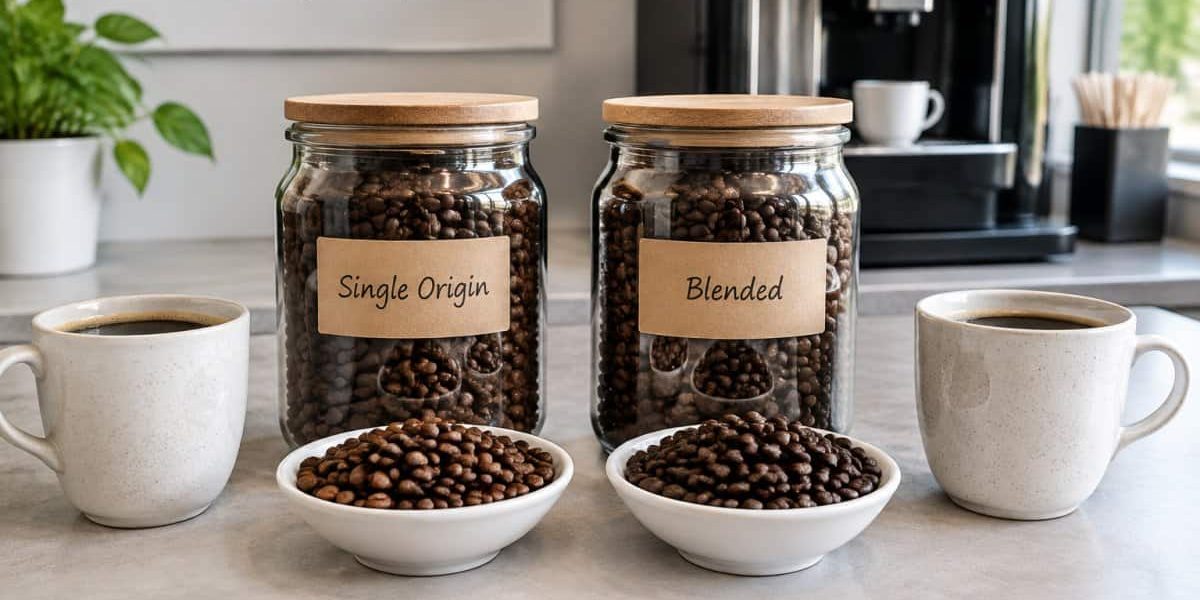
Comparing single origin vs blended office coffee comes down to whether you want a coffee that changes with each harvest or one that tastes the same every morning. Single origin comes from one place and shows its character, while a blend combines several origins to build a steady, balanced cup. For daily office use, a blend gives you reliable flavour across users, machines and months.
- Single origin coffee is grown in one defined place, such as a single country, region, farm, estate or cooperative.
- Blends are designed to stay stable, so the taste your team expects in January is still there in June.
- A medium to medium-dark roast usually pleases the widest range of office drinkers, black or with milk.
- For milk based drinks, a medium-dark espresso blend is the dependable choice because milk softens acidity.
- Build a program with a crowd-pleasing medium roast blend as the daily default and a rotating single origin option.
Table of Contents
- Single Origin vs Blended Office Coffee: The Core Difference
- What Single Origin Coffee Means
- What a Coffee Blend Means
- Flavour Profiles, Tasting Notes and Roast Level
- Consistency, Batch Variation and Seasonal Availability
- Best Coffee Beans for an Office: Matching Beans to Your Machine
- Coffee for Milk Based Drinks: Which Beans Hold Their Own
- Cost Per Cup, Waste and Supply Continuity
- Choosing Beans for a Diverse Team: Tasting, Preferences and Inclusive Programs
- Get Your Instant Quote for Office Coffee Machines
- Frequently Asked Questions
Single Origin vs Blended Office Coffee: The Core Difference
Comparing single origin vs blended office coffee comes down to one question: do you want a coffee that changes with each harvest, or one that tastes the same every morning? Single origin comes from one place and shows its character. A blend combines several origins to build a steady, balanced cup.
This guide from Admiral Vending is written for the person who actually has to buy the beans: the office manager, facilities lead or business owner who needs a machine full and a team happy. Below, we break down flavour, consistency, machine fit and supply, then show you how to choose for a real workplace rather than a tasting bar.
What Single Origin Coffee Means
Single origin coffee is coffee grown in one defined place: a single country, region, farm, estate or cooperative. Nothing is mixed in from elsewhere, so the cup reflects that one location’s soil, altitude and processing.
The appeal is traceability and character. You can taste the difference between a Kenyan and a Colombian lot, and the label tells you exactly where the beans came from. The trade-off is that each harvest tastes a little different, and availability shifts with the seasons.
What a Coffee Blend Means
A coffee blend is two or more single origin coffees combined to hit a target flavour. A roaster might pair a bright, acidic bean with a heavier, sweeter one so the result is balanced and repeatable.
Blends exist for consistency and balance. The roaster adjusts the recipe as crops change, so the bag you buy next quarter tastes like the bag you bought last quarter. For an office serving dozens of people with different preferences, that reliability is the whole point.
Flavour Profiles, Tasting Notes and Roast Level
Single origin coffees tend to be more distinctive: clear sweetness, pronounced acidity or a specific fruit or floral note. Blends are built to be smoother and more rounded, with complementary flavours that balance each other out.

Office Coffee Machines for UK Businesses | Barista Quality Coffee at Work | UK
Admiral Vending Systems
Roast level changes everything. A light roast preserves origin flavours and acidity; a dark roast pushes toward chocolate and caramel and mutes the origin character. For an office, a medium to medium-dark roast usually pleases the widest range of drinkers, whether they take it black or with milk. It is the safest middle ground when you are buying for a crowd rather than a single palate.
Consistency, Batch Variation and Seasonal Availability
Here is where the office decision gets made. Single origin coffees vary from batch to batch and can disappear when a harvest runs out. Blends are designed to stay stable, so the taste your team learns to expect in January is still there in June.
For a workplace, that consistency matters more than novelty. A blend gives you a reliable flavour across users, machines and months, which is exactly what you want when fifty people are making coffee on autopilot. Single origin works well as an occasional guest bean, not always as the daily workhorse.
| Factor | Single Origin | Blend |
|---|---|---|
| Flavour | Distinctive, changes by harvest | Balanced, repeatable |
| Consistency | Varies batch to batch | Stable across batches |
| Availability | Seasonal, can sell out | Year-round supply |
| Best for | Tasting, variety, black coffee | Daily office use, milk drinks |
| Cost per cup | Often higher | Usually lower at volume |
Best Coffee Beans for an Office: Matching Beans to Your Machine
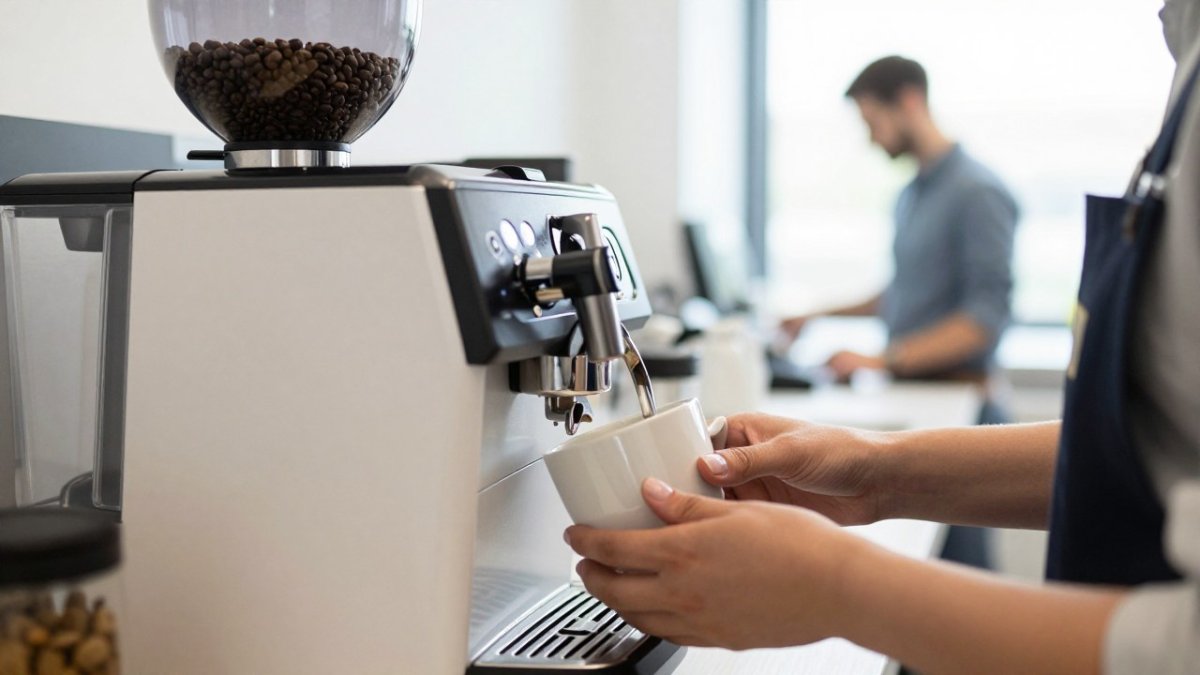
The best coffee beans for an office are the ones your machine can grind and extract well, day after day. A commercial bean to cup machine grinds fresh on demand, so bean freshness, roast level and grind compatibility matter. This is the angle most comparisons miss: the same coffee can taste excellent in one workplace system and disappointing in another, because the machine sets the ceiling on what the bean can deliver.
Coffee Blends for Bean to Cup Machines
Coffee blends for bean to cup machines are the natural fit for most workplaces. A well-built espresso blend extracts evenly and holds its flavour across milk and black drinks, which suits an automatic machine serving a mixed team. If you are still weighing up hardware, our commercial bean to cup coffee machines show the range these blends are brewed on.
Single Origin Coffee for Espresso
Single origin coffee for espresso can be excellent, but it is less forgiving. A very bright, light-roasted single origin may taste sharp or thin through an automatic machine set for a darker blend. If your team loves espresso and black coffee, a single origin works; for a mixed-drink office, treat it as a treat rather than the default. Our traditional espresso coffee machines suit teams leaning that way, because a skilled operator can adjust grind and dose to suit the bean.
Drip and Filter Machines
Drip and filter machines are more forgiving of single origin than espresso systems, because the brew ratio and water temperature are less sensitive to bean density. A single origin with clear acidity and fruit notes can shine in a filter brewer, and the lack of pressure means a light roast will not taste thin. Blends still work well in filter, but the case for single origin is stronger here than in any other office brewing method. If your workplace runs a batch brewer alongside a bean to cup machine, a single origin is a sensible second option for the filter station.
Coffee for Milk Based Drinks: Which Beans Hold Their Own
Coffee for milk based drinks needs body and sweetness, because milk softens acidity and mutes delicate notes. A blend built for espresso usually wins here: it cuts through cappuccino and latte with enough weight to taste like coffee, not hot milk.
Single origin can work in a flat white or cortado if it has natural sweetness and body, but very light, acidic lots get lost under milk. For a team where most drinks are milk based, a medium-dark espresso blend is the dependable choice.
Cost Per Cup, Waste and Supply Continuity
Cost per cup is where single origin and blends part company in the budget, but the gap is smaller than most buyers assume once you account for waste and machine settings.
Single origin coffees are seasonal by nature and can leave gaps when a harvest ends. If your team has standardised on a specific Ethiopian lot, a poor harvest or a late shipment can force a reformulation or a substitute that tastes noticeably different.
Supply continuity is the other half of the equation. Single origins are seasonal by nature, and a favoured lot may simply not exist next quarter. A blend that changes recipe without notice is no more reliable than a single origin that sells out.
To work out your own figures, use our guide on how to calculate office coffee costs and compare against what your team spends on coffee elsewhere. The practical rule is to model cost per cup at your actual dose and rejection rate, not at the bag price alone.
Choosing Beans for a Diverse Team: Tasting, Preferences and Inclusive Programs
A diverse team rarely agrees on coffee, so build a program rather than pick a single winner. Start with a crowd-pleasing medium roast blend as the daily default, then offer a single origin as a rotating option for the enthusiasts.
Run a simple tasting: label two cups, ask staff to note what they taste, and let the majority steer the house bean. Keep a decaf and a milk-friendly blend available so nobody is left out. For more ideas, see how can you make office coffee taste better across the whole team.
Get Your Instant Quote for Office Coffee Machines
Choosing between single origin and blended coffee is easier once the machine is right. At Admiral Vending, we supply commercial bean to cup coffee machines for offices, showrooms and high-footfall sites, backed by eight years of industry experience, professional installation, operator training and nationwide support. Our AI-powered instant quote system gives you a fast, tailored quote. Get your instant quote for office coffee machines to request pricing for your workplace.
Ready to give your team better coffee? Get your instant quote from Admiral Vending and match the right machine and beans to your workplace.
Frequently Asked Questions
What is the difference between single origin coffee and a blend?
Single origin coffee comes from one country, region, farm or cooperative, so it carries the distinctive flavour of that place. A blend combines beans from several origins to create a balanced, repeatable taste. In an office, single origin offers variety and traceability, while blends deliver consistency across batches and work well in high-volume bean to cup machines.
Which coffee is better for an office, single origin or a blend?
For most workplaces, a blend is the safer default because it keeps flavour reliable from batch to batch and suits milk based drinks. Single origin works well as a rotating guest option or for teams that enjoy tasting notes. Many offices run both: a house blend for daily drinking and a single origin for variety, which covers personal preference across a diverse team.
Does blended coffee taste more consistent than single origin coffee?
Yes, generally. Blends are formulated to smooth out the seasonal and batch variation that single origin coffees naturally show, so the cup tastes the same week to week. Single origin coffees change with harvest and processing, which is part of their appeal but can surprise staff who expect a familiar flavour. For workplace consistency across users, blends are the more predictable choice.
Is single origin coffee suitable for milk based drinks?
Some single origins work well with milk, particularly medium to dark roasts with enough body and sweetness to cut through. However, blends are usually designed for milk based drinks because their complementary flavours stay balanced when milk is added. If your team drinks mostly lattes and cappuccinos, a blend is the more reliable starting point; test a single origin as an occasional alternative.
How should an office choose coffee beans for different tastes?
Start with a house blend for everyday drinking, then add one or two single origins as rotating options. Run a simple tasting session so staff can compare, and keep a feedback sheet near the machine. This inclusive approach covers personal preference without overcomplicating procurement, and it helps you see which beans actually get used before committing to larger orders.