Table of Contents
- Why Bean to Cup Machines Matter in the Workplace
- How Bean to Cup Coffee Machines Work
- Fresh Flavour and Drink Quality That Employees Value
- Employee Satisfaction and Office Coffee Culture
- Bean to Cup Machine Capacity for Busy Offices
- Productivity, Focus, and the Coffee Break Effect
- Convenience and Time Savings for Your Team
- Conclusion
- Frequently Asked Questions
Last Updated: October 21, 2026
Why Bean to Cup Machines Matter in the Workplace
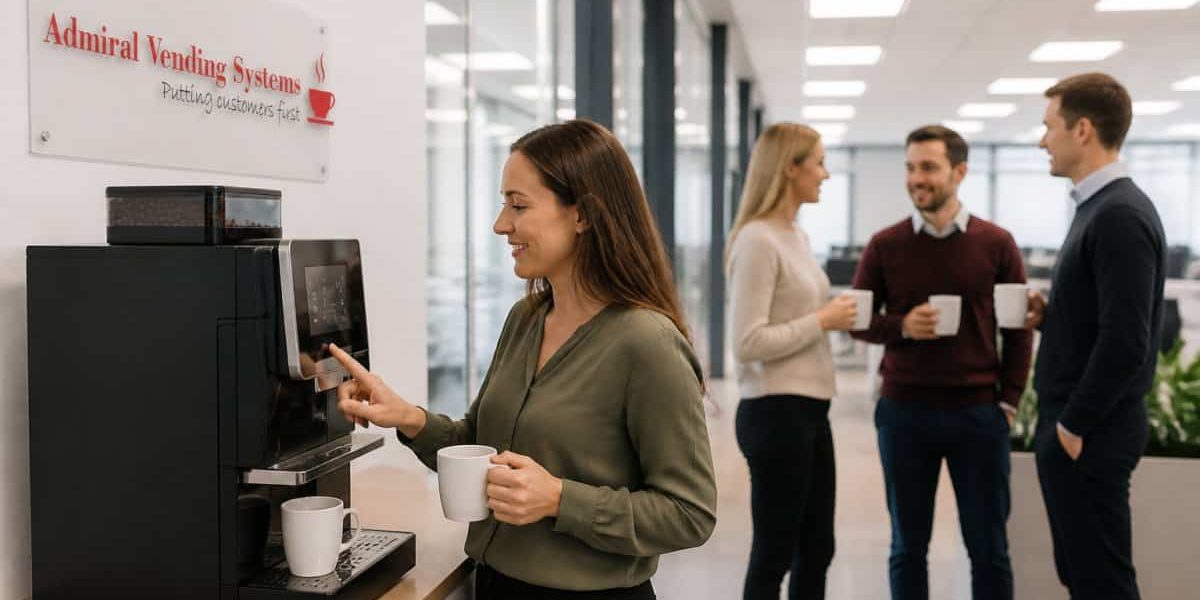
The difference between a good office and a great one often comes down to the small things. Coffee is one of them. When employees can access a quality espresso, cappuccino, or latte without leaving the building, something shifts. Morale improves. People linger a bit longer at the coffee station, chat with colleagues, and return to their desks refreshed. This is where bean to cup machines make their mark. They deliver café-quality drinks on demand, transforming how teams experience their workday.
At Admiral Vending, we’ve spent eight years helping businesses across the UK understand the real impact of the benefits of bean to cup machines for employees. The machines themselves are straightforward: they grind fresh coffee beans and brew drinks instantly. But the workplace effects run deeper. Employees gain access to premium beverages without stepping outside. Time savings add up. Satisfaction increases. Productivity often follows. This guide explores why bean to cup machines matter for your team, and how they address common workplace pain points that cost businesses far more than most realise.
How Bean to Cup Coffee Machines Work
A bean to cup machine automates the entire process from whole coffee beans to finished drink in under two minutes. The operator simply presses a button, and the machine handles the rest.
Here’s what happens inside: The grinder pulverises whole coffee beans to the exact consistency needed for espresso extraction. Fresh grounds matter because they release flavour compounds immediately after grinding. Those compounds oxidise and fade within minutes, which is why pre-ground coffee loses quality so quickly. The machine then forces hot water through the grounds under pressure, extracting espresso. This base shot becomes the foundation for every drink. For an americano, hot water is added. For a cappuccino or latte, the machine froths milk and combines it with the espresso. On selected models, you can brew fresh tea or dispense hot chocolate.
The consistency is built in. Every cappuccino tastes the same because the machine controls grind size, water temperature, pressure, and timing. An untrained operator produces café-standard drinks. This eliminates the variables that make traditional coffee machines unpredictable. No skill required. No waste from failed attempts. Just reliable, repeatable quality every single time.
Fresh Flavour and Drink Quality That Employees Value
Freshly ground coffee tastes noticeably better than pre-ground alternatives. The difference is chemistry. When coffee beans are ground, they expose millions of tiny particles to air. Oxidation begins immediately. Within 15 minutes, volatile aromatic compounds start to degrade. Within hours, the coffee tastes flat and stale. Bean to cup machines grind only what they need, moments before brewing. The result is a drink with bright, complex flavour that employees notice and appreciate.

This quality matters for workplace morale. Employees who can access a proper espresso-based drink at work are less likely to leave the office for a coffee run. They save time, stay focused, and feel valued by their employer. A business that provides quality refreshments sends a message: we care about your experience here. It’s a small gesture with measurable effects on how people feel about their workplace.
The variety also counts. A single bean to cup machine can deliver espresso, americano, cappuccino, latte, flat white, macchiato, and hot chocolate. Some models brew fresh tea. Employees with different preferences all find something they enjoy. This inclusivity matters more than many managers realise. The employee who doesn’t drink coffee still gets a quality hot drink. The one who prefers a strong americano gets exactly that. The person who wants a frothy cappuccino doesn’t have to settle for instant coffee.
Employee Satisfaction and Office Coffee Culture
Claims that coffee improves morale are easy to make and hard to prove. The honest position is that a well chosen bean to cup machine removes friction from the working day, and that removing friction tends to show up in how employees talk about their workplace.

A practical way to do this is to baseline before installation and revisit after three months. Useful measures include: the number of drinks dispensed per week (most machines log this), the proportion of employees using the machine at least once a day, reported time spent leaving the building for coffee, and a short satisfaction question in your existing employee survey.
Adoption depends on inclusion. A machine that only serves strong espresso based drinks will be ignored by a meaningful share of any team. Configure the menu to cover decaffeinated options, a range of milk including dairy free alternatives, hot chocolate, and where the model allows, fresh tea and hot water. Label milk types clearly and keep allergens visible, in line with your food safety obligations.
Culture forms around the machine when it is reliable and pleasant to use. Consistency helps: the same flat white at 9am and 3pm, no burnt shots, no milk that has sat too long. A clean machine with a clear cleaning schedule signals that the employer takes the provision seriously, and employees respond to that.
Measure adoption honestly. If usage is low, the cause is usually one of four things: the machine is in the wrong place, the menu does not suit the team, the drinks are not good enough, or nobody has been shown how to use it. Each has a straightforward fix, and each is cheaper to address than replacing the machine.
The defensible claim is this: a bean to cup machine, specified for the team and maintained properly, gives employees a reliable reason to take a proper break without leaving the building. Whether that translates into retention or productivity gains depends on your workplace, and the way to know is to measure it rather than assume it.
Bean to Cup Machine Capacity for Busy Offices
Capacity is where bean to cup installations succeed or fail. A machine that is undersized for its queue creates frustration; an oversized one wastes energy, beans, and floor space. The right answer depends on four variables: headcount, peak demand, drink mix, and the physical constraints of where the machine will sit.
Start with headcount, but do not stop there. A team of 60 that mostly drinks americano places a different load on a machine than a team of 60 where half order milk based drinks at 9am. Milk frothing and cleaning cycles between milk drinks slow throughput more than black coffee, so a milk heavy office needs either a higher throughput model or a second unit.
Peak demand matters more than daily totals. Most office consumption clusters into two windows: the first 90 minutes of the day and the mid afternoon slump. A machine rated for 200 drinks a day can still queue badly if 40 of those drinks are wanted between 8:30 and 9:30.
Bean hopper size and water capacity determine how often someone has to intervene. A 1kg hopper typically covers several hundred drinks before a refill, but a busy site may still need a daily top up. Plumbed machines remove the water refill task entirely and are worth considering where a water supply and waste connection are available; tank fed models need a refill routine assigned to a named person.
Placement is part of capacity. The machine needs a level surface, ventilation clearance, and access to power, and if plumbed, a water feed and drain. Noise matters in open plan offices: grinders and milk frothers are audible, so siting the machine away from desks and meeting rooms reduces complaints. Allergen awareness also belongs here.
Finally, plan for service. A maintenance contract with defined response times keeps a busy machine running; a machine without cover can sit idle for days after a fault. Match the service arrangement to how critical the coffee provision is to your team, and confirm who is responsible for descaling, cleaning tablets, and milk line hygiene.
Productivity, Focus, and the Coffee Break Effect
Caffeine sharpens focus (The Neurophysiology of Caffeine as a Central Nervous System Stimulant and the Resultant…). That’s biochemistry, not opinion. When an employee takes a proper break with a quality coffee, they return to work more alert and capable of concentration. The break itself matters too. A few minutes away from the screen, talking with colleagues, reduces mental fatigue. The combination of caffeine and genuine rest improves afternoon productivity.
A workplace without accessible quality coffee sees employees making trips outside the office. These trips take longer than a five minute coffee break. Employees leave at 2pm, return at 2:20, and have lost momentum. When the machine is onsite, the break is five minutes. The employee stays focused on their day. The cumulative effect across a team of 50 or 100 people is significant. Less time lost to external coffee runs means more time spent on actual work.
The psychological element matters too. Employees who feel their workplace cares about their comfort and satisfaction tend to be more engaged. A quality coffee machine signals that care. It’s a tangible benefit they experience multiple times daily. This small investment in their experience translates into better morale and, often, better retention.
Convenience and Time Savings for Your Team
An office without a quality coffee solution costs more in lost time than most managers realise. Employees who want a proper coffee make a choice: settle for instant at the office, or leave to buy one. Many choose to leave. A trip to an external café takes 15 to 20 minutes. If 30 people in your office do this twice a week, that’s 300 minutes of lost productivity weekly. Over a year, it compounds.
A bean to cup machine eliminates this choice. A quality drink is available instantly, onsite. The employee spends five minutes getting their coffee and chatting with a colleague. They return to work. No time lost to travel. No disruption to their day. This convenience adds up significantly across a team.
The machine also saves time for the business. There’s no need to manage an external coffee service or stock instant coffee supplies. The machine handles its own brewing. Staff simply refill the bean hopper and water tank. Cleaning is straightforward. The operational burden is minimal compared to the benefit delivered.
Conclusion
The benefits of bean to cup machines for employees extend beyond the obvious. Yes, employees get access to quality espresso-based drinks. But the real impact is on workplace culture, morale, and productivity. Employees feel valued when their workplace invests in their experience. They take better breaks. They connect with colleagues. They return to work more focused. They spend less time chasing coffee elsewhere.
Admiral Vending specialises in commercial bean to cup machines designed for different office sizes and usage levels. We handle expert machine selection, professional installation, operator training, and ongoing support. Our AI-powered instant quote system makes it simple to find the right solution for your team. Whether you’re running a small office of 40 people or a large corporate headquarters, we have machines with the capacity and reliability your workplace needs. Get your instant quote today and discover how the right coffee machine transforms your office experience.
Frequently Asked Questions
What are the main benefits of bean to cup machines for employees?
Bean to cup machines deliver fresh, quality coffee on demand, which boosts employee satisfaction and morale. They eliminate queues and waiting times, saving staff 10-15 minutes per day that would otherwise be spent buying coffee elsewhere. Employees enjoy barista-style drinks including espresso, cappuccino, and latte without leaving the office, which improves workplace experience and encourages team breaks that support focus and creativity.
How do bean to cup coffee machines work?
Bean to cup machines grind whole coffee beans fresh for each drink, extract the espresso shot, and automatically froth milk when needed. The grinder adjusts to the correct coarseness, the brewing group extracts at optimal temperature and pressure, and the machine dispenses the finished drink within seconds. This on-demand process ensures consistent quality and flavour every time, unlike pre-ground or instant coffee alternatives.
Can bean to cup machines handle peak demand in a busy office?
Yes, when sized correctly for your workforce. Higher capacity tabletop and floor standing bean to cup machines can serve hundreds of drinks per day and handle multiple drinks during peak times without significant queues. Machines with larger bean hoppers require less frequent refilling, and faster brew cycles mean employees spend less time waiting. Admiral Vending offers machines designed specifically for busy offices, showrooms, and commercial environments with varying throughput needs.
Do bean to cup machines improve employee productivity?
Research shows that access to quality coffee at work supports focus, creativity, and mental clarity. Employees who can grab a premium drink quickly without leaving the office take more regular breaks, which improves alertness and reduces fatigue. The social aspect of coffee breaks also strengthens team connection and morale, both of which contribute to a more engaged and productive workforce.