Table of Contents
- 1. Start With Bean to Cup Coffee Machines for Offices and Guest Areas
- 2. Design an Arrival Coffee Moment That Sets the Tone
- 3. Steal These Office Coffee Station Ideas for Lobbies and Lounges
- 4. Build a Coffee Menu That Matches Guest Preferences
- 5. Offer Coffee Options for Business Meetings and Events
- 6. Follow Coffee Machine Maintenance Best Practices for Reliable Service
- 7. Measure How Premium Coffee Lifts Guest Satisfaction
- Conclusion: Small Coffee Choices, Memorable Stays
- Frequently Asked Questions
Last Updated: October 19, 2026
1. Start With Bean to Cup Coffee Machines for Offices and Guest Areas
A guest’s first impression of your venue often forms before they speak to a single member of staff, and the coffee machine in the corner plays a bigger part in that than most hoteliers realise. At Admiral Vending, we supply bean to cup coffee machines for offices, showrooms and hospitality spaces, and we have seen how much difference the right equipment makes to how guests talk about a stay.
Premium coffee is freshly ground, professionally served coffee that signals care and quality to every guest who drinks it. The machine behind that cup matters more than the bean alone.
Bean to cup machines grind on demand, so every drink tastes fresh rather than stewed. Our range covers compact tabletop models for smaller lounges and higher capacity floor standing machines for busy receptions and breakfast rooms. Guests get espresso, americano, cappuccino, latte and hot chocolate at the touch of a button, with no barista required.
That consistency is the point. A machine that delivers the same quality cup at 7am and 7pm builds trust.
2. Design an Arrival Coffee Moment That Sets the Tone
Picture a guest walking in after a long drive, tired and a little frayed. Within two minutes, they have a hot flat white in hand and a smile on their face. That is the arrival coffee moment, and it costs you very little to create.
Set a machine close to reception, with cups, stirrers and a small sign inviting guests to help themselves. Train front desk staff to offer a drink during check-in rather than waiting to be asked. This small gesture turns a transactional sign-in process into a warm welcome.
Many hotels find that a self-serve station also cuts queues at peak arrival times. Guests like the independence, and your team gets breathing room to handle the trickier parts of check-in.
Put the machine where guests can see and smell it. The aroma of fresh coffee does more for an arrival experience than any signage ever will.
3. Steal These Office Coffee Station Ideas for Lobbies and Lounges
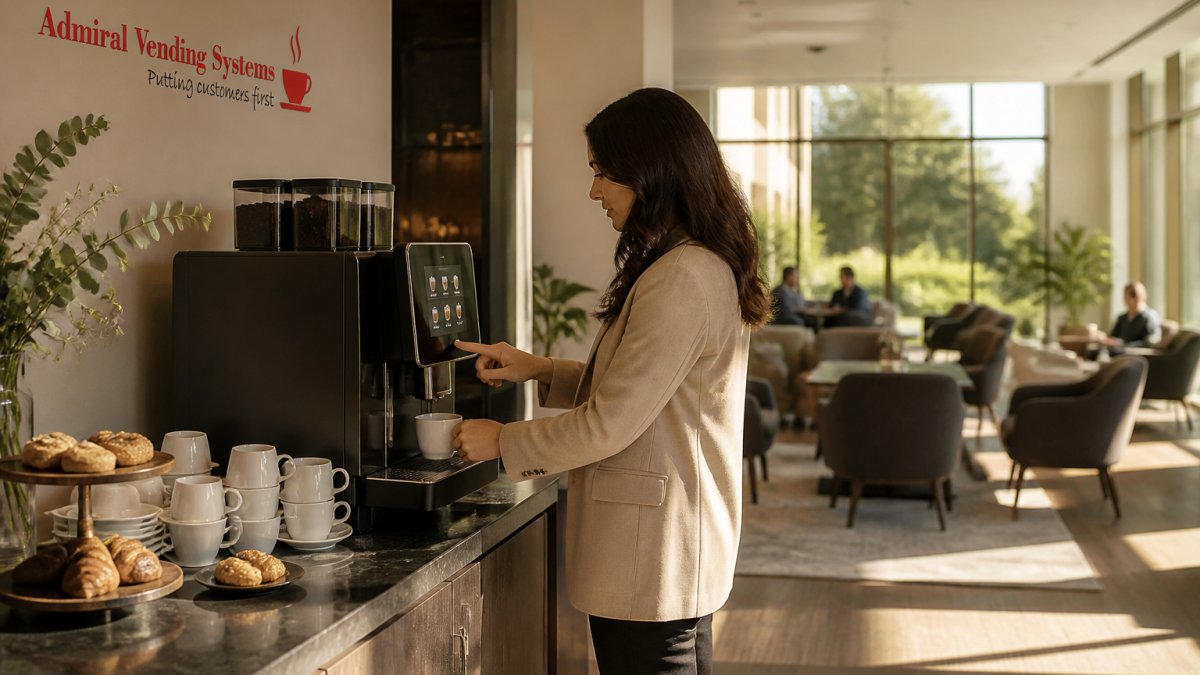
The best office coffee station ideas translate directly to hospitality, but only if you treat the station as a designed touchpoint rather than a utility corner. A cluttered corner with paper cups and a stained tray undermines everything else you have built. A clean, well-lit station with proper crockery does the opposite.
Start with placement. Put the machine where guests naturally pause: near reception, at the entrance to the breakfast room, or beside the lounge seating. The aroma of fresh coffee should reach guests before they see the machine. Avoid tucking it into a corridor or behind a pillar, because guests will not use what they cannot easily find.
Then think about the physical setup. A sturdy side table or counter at waist height works better than a low coffee table. Leave clear space for cups, stirrers, napkins and a small tray of biscuits or pastries. Provide ceramic cups for seated guests and keep a small supply of disposable cups with lids for those taking drinks away. A simple sign listing the options and dietary alternatives removes friction and shows you have thought about everyone.
Maintenance is part of the design. Place a bin and drip tray within easy reach, and make sure staff check and wipe the station every hour during peak periods. A station that looks cared for signals that the whole venue is cared for.
Try these touches in your lobby or lounge:
- Ceramic cups instead of disposable ones for seated guests
- A small tray of biscuits or pastries beside the machine
- Clear signage on drink options and dietary alternatives
- A bin and drip tray that staff check every hour
- Soft lighting and a plant to soften the corner
- A small framed card describing the coffee origin and roast
The station should feel like part of the room’s design, not an afterthought bolted to a side table. Guests notice the details, even when they do not comment on them. A well-designed station also reduces staff workload because guests serve themselves and the setup is easy to keep tidy.
4. Build a Coffee Menu That Matches Guest Preferences
No two guests want the same cup. Some want a strong espresso before an early meeting. Others want a milky latte to ease into the day. A coffee menu that only offers one option quietly disappoints half your guests.

Our machines cover a broad beverage selection, and we recommend using that range:
- Espresso and americano for guests who like it black
- Cappuccino and latte for milk-based drinkers
- Hot chocolate for non-coffee drinkers and children
- Fresh brew tea on selected models
- Decaf and dairy-free milk options where the machine supports them
Label the menu clearly and place it beside the machine. Guests with dietary needs should not have to ask three members of staff what is available. A simple card listing the options removes that friction and shows you have thought about everyone.
5. Offer Coffee Options for Business Meetings and Events
Coffee options for business meetings are not a nice extra. They are part of the meeting itself. A lukewarm flask and a stack of chipped cups sends the wrong signal to a client or a conference delegate. Investing in superior ingredients demonstrates a commitment to excellence that begins with performing rigorous quality checks for beans before they ever reach the brewing station.
For meeting rooms, position a machine nearby or arrange for staff to serve fresh drinks at breaks. Bean to cup machines handle volume well, so a room of twenty can be served quickly without a barista. Our higher capacity tabletop models suit busy meeting suites and event spaces.
Consider the timing. Guests usually want coffee on arrival, mid-morning and after lunch. Plan your service around those peaks so nobody is left waiting while a session restarts.
Never let a meeting room run out of cups or milk mid-session. The scramble that follows is more memorable than the coffee itself, and not in a good way.
6. Follow Coffee Machine Maintenance Best Practices for Reliable Service
Coffee machine maintenance best practices are simple, and skipping them is the fastest way to lose the guest experience you built. A machine that breaks down during breakfast service creates complaints you then have to manage.
Daily tasks for your team:
- Empty the grounds bin and drip tray
- Wipe the steam wand and spouts
- Check water levels and milk supply
- Run the machine’s rinse cycle
Weekly and periodic tasks:
- Run the descaling cycle as the machine prompts
- Clean removable parts thoroughly
- Book a professional service visit on a set schedule
We provide operator training and ongoing service support with every machine, so your staff know what to do and who to call. A machine that is looked after properly delivers reliable service for years.
7. Measure How Premium Coffee Lifts Guest Satisfaction
You cannot improve what you do not measure. Guest satisfaction with your coffee offering shows up in feedback, reviews and repeat bookings, and you should track it deliberately. Most hospitality operators track coffee anecdotally, but a structured approach turns coffee from a cost line into a measurable driver of guest experience.
Start with a simple post-departure survey question: “How satisfied were you with the coffee available during your stay?” Use a five-point scale and add an optional comment box. This gives you a baseline score you can track month on month. A common pattern is for scores to rise within four to six weeks of upgrading equipment or improving the station setup.
Next, monitor review mentions. Set up a simple weekly check of online feedback for words like “coffee”, “breakfast” and “drinks”. Note whether mentions are positive, negative or neutral. Over time you will see whether changes to your offering shift public perception. Many teams find that positive coffee mentions correlate with higher overall review scores.
Track daily usage volume by asking staff to note how many cups are served or how often the machine is refilled. This reveals demand patterns and peak times, which helps you plan staffing and stock. If usage is low, the station may be poorly placed or poorly signposted.
Log complaints at the front desk. Record the nature of each complaint (temperature, availability, queue, taste) and review the log weekly. A spike in complaints about queues suggests you need a second machine or better staffing at peak times. A spike in temperature complaints suggests a maintenance issue.
Finally, connect coffee metrics to business outcomes. Compare your coffee satisfaction score with repeat booking rates and overall guest satisfaction scores. While correlation is not causation, a consistent pattern across months gives you evidence to justify further investment. Use the data to spot problems early and to prove the value of premium coffee to the business.
| What to measure | How to collect it | Why it matters |
|---|---|---|
| Coffee satisfaction score | Post-departure survey question | Tracks guest sentiment over time |
| Review mentions | Monitor online feedback | Shows public perception of your offering |
| Daily usage volume | Staff station checks | Reveals demand and peak times |
| Complaints logged | Front desk records | Flags equipment or supply issues early |
| Repeat booking rate | Booking system data | Connects coffee experience to loyalty |
Treat coffee as a guest experience metric, not a catering line item. When you measure it consistently, you can prove its value to the business and make better decisions about equipment, staffing and menu changes.
Conclusion: Small Coffee Choices, Memorable Stays
Every guest remembers how a stay felt, and the coffee they drank is part of that memory. Getting the machine, the menu and the service right turns an ordinary touchpoint into a reason to return.
If you are reviewing your coffee offering, Admiral Vending can help. We supply commercial bean to cup coffee machines with expert selection, professional installation, operator training and nationwide support. Our AI powered instant quote system makes it easy to find the right machine for your property. Get your instant quote and give every guest a cup worth remembering.
Frequently Asked Questions
How can premium coffee improve the guest experience?
Premium coffee turns a routine drink into a moment guests remember. Freshly ground beans, a proper espresso or flat white and a clean, well-stocked station signal that you care about detail. Guests notice the difference between instant sachets and barista-style coffee, and that perception carries into how they rate their stay. Pairing premium coffee with consistent service standards and a welcoming setup gives guests a reason to return and to recommend you to others.
What type of coffee machine is best for a busy workplace or hotel?
For high footfall areas, bean to cup coffee machines for offices and hospitality venues are usually the best fit. They grind fresh beans on demand, deliver a consistent drink without barista skills and handle anything from dozens to hundreds of drinks a day. Choose a tabletop model for smaller meeting rooms and a floor standing bean to cup machine for lobbies, restaurants or factory floors. Match capacity to your busiest hour, not your average day, to avoid queues.
What coffee options should workplaces and hotels offer guests?
Cover the classics first: espresso, americano, cappuccino and latte, plus hot chocolate and fresh brew tea on selected machines. Add decaf and a dairy alternative so guests with dietary needs are not left out. For business meetings, offer a simple coffee menu with clear names and a self-service setup so guests can help themselves without waiting. A small, well-chosen menu executed consistently beats a long list of drinks nobody orders.
How can businesses make coffee service more consistent?
Consistency comes from three things: reliable equipment, trained staff and a simple maintenance routine. Follow coffee machine maintenance best practices such as daily cleaning, regular descaling and prompt reporting of faults. Keep a fixed menu and standard cup sizes so every drink tastes the same whoever makes it. Staff training on the machine and a clear restocking checklist prevent the flat coffee and empty bean hoppers that guests remember for the wrong reasons.